
Food should give a pilgrim steadiness, not become another source of uncertainty. Across a Kashi–Rameshwaram journey, families move through different regions, hotel kitchens and ritual mornings. The right plan is therefore not one rigid menu; it is a clear understanding of the family's observance, health and everyday needs.
Begin this conversation before travel. Decide what satvik means in your household, who may be fasting, which medicines require food, and which restrictions concern preference, religious practice, allergy or a diagnosed medical condition. These distinctions help every meal be arranged more responsibly.
What satvik food means
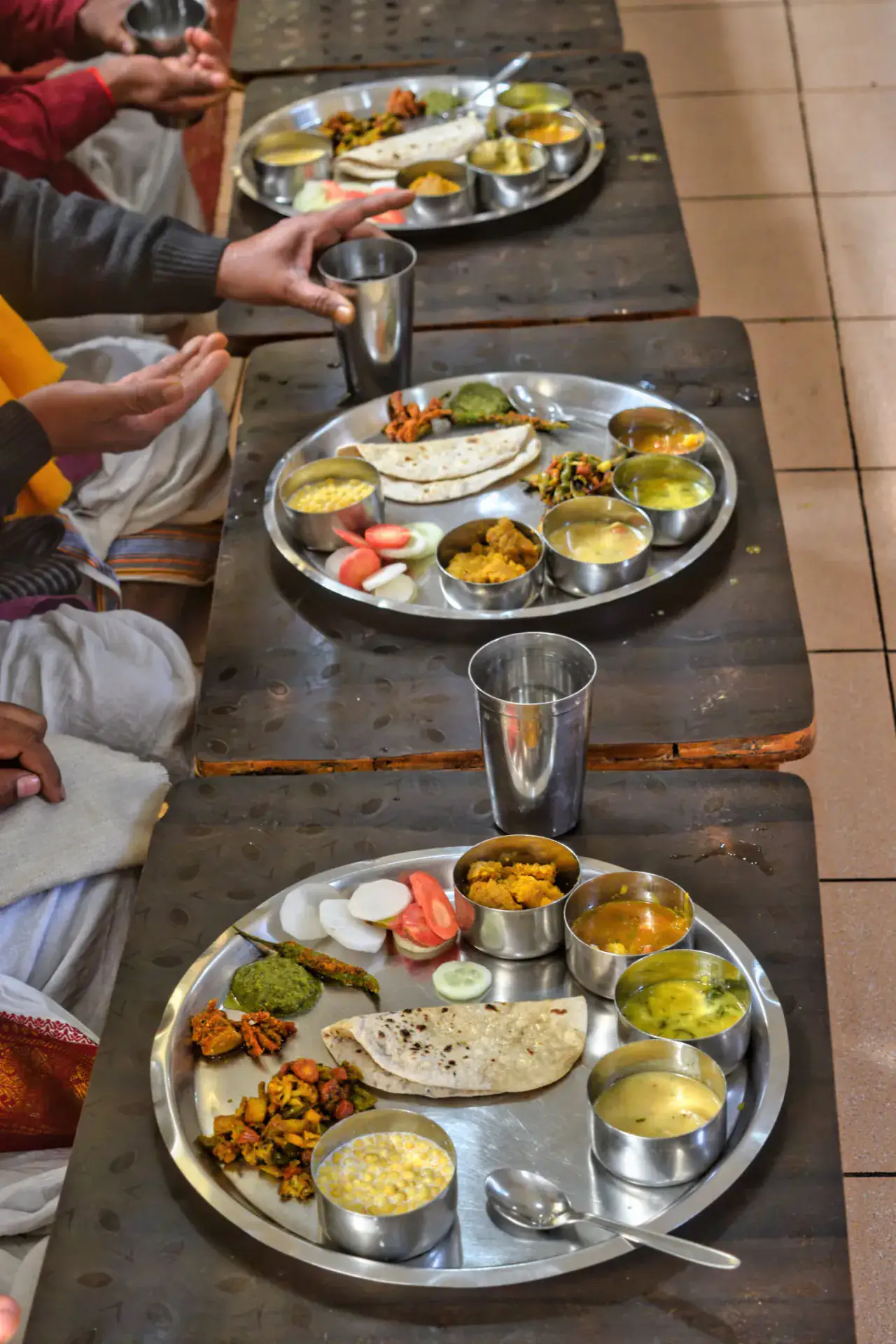
Satvik—also written sattvik or sattvic—comes from sattva, the quality of clarity, balance and harmony. The Bhagavad Gita's seventeenth chapter describes satvika food by the life, health, strength, contentment and wellbeing it supports. For a pilgrim, the practical spirit is fresh, wholesome, moderate food received with gratitude.
Many families understand a satvik ritual meal as vegetarian and free from onion, garlic and alcohol. Others follow stricter rules about grains, root vegetables, salt, leftovers, tea or the kitchen in which food is prepared. These are family and sampradaya distinctions, best confirmed before the menu is arranged.
Fermentation should not be used as a careless universal test. Foods such as idli and dosa may be familiar and acceptable in many South Indian pilgrim households, while another family may avoid them on a particular vrata day. State the actual requirement—do not rely only on the word “satvik” and assume every kitchen will interpret it identically.
Who fasts on a ritual morning
The person performing an ancestral rite may be advised to observe a fast or dietary restraint before the sankalpa and offerings. Accompanying relatives, children and elders may not be under the same rule. Even for the performer, traditions differ on water, milk, fruit, tea, medicines and the time at which the fast properly ends.
The number of fasting mornings is not fixed by the number of tour days. It depends on which rites the family undertakes at Rameshwaram, Kashi, Prayagraj and Gaya, how those rites are grouped and what the officiating pandit advises.
Before finalising the itinerary, ask four direct questions:
Write the answer into the family plan. “We assumed” is not a useful fasting instruction.
Who
Which travellers are expected to fast, and who may eat normally?
From when
Does the observance begin the previous evening, at midnight, on waking or at another point?
What is permitted
Are water, prescribed medicine, milk, fruit or a light medical meal allowed for this person?
How it ends
After which ritual stage may the performer drink or eat, and is a particular first food customary?
Medicines and conditions affected by fasting
Diabetes, pregnancy, frailty, kidney or heart conditions, a history of fainting, eating disorders and medicines that require food all need individual attention. Children may also need a normal breakfast even when a parent is fasting.
Do not stop medicine, alter a dose or undertake a prolonged fast on the strength of a tour article. Seek advice from a qualified clinician who understands the planned duration, weather, walking and early start. Then tell the pandit what accommodation is medically needed so the ritual form can be considered with that information.
The practical plan should identify who carries medicines, glucose or another clinician-advised emergency item, what symptoms require the fast to end, and where suitable food or water can be reached. A medical need should be discussed respectfully before the morning, never treated as weak devotion.
Preparing the previous evening
A simple, familiar evening meal can be more helpful than experimenting with rich regional food before an early rite. Confirm the wake-up time only after the pandit's meeting time and transport have been settled; not every family leaves at the same hour.
Prepare permitted drinking water, medicines, dry clothing, dietary instructions and any light food approved for a child, elder or medical need. If the performer is fasting, keep that person's food separate but close enough to be available when the pandit says the observance is complete.
Avoid turning the evening into a rulebook. The aim is a rested family and an unhurried sankalpa, not anxiety about whether one ordinary household detail has made the journey impure.
The first meal after a rite
The first meal may feel significant because it follows concentration, prayer and physical effort. It need not be dramatic or elaborate. A freshly prepared, simple satvik meal suited to the family's tradition and health is usually the clearest plan.
Plan where the meal will be available, how long it may take to reach it, and whether someone may need water or food approved by their clinician sooner. Keep the eating time flexible because temple access, river conditions, crowds and your family’s pace can change the morning.
After a long fast, each person's needs differ. Someone with diabetes follows the agreed medical plan; a child may already have eaten; an elder may need a small familiar portion. Regional foods such as rice, dal, vegetables, khichdi, idli or another suitable preparation can be chosen according to place and preference rather than treated as a ritual requirement.
Eating across the sacred cities
The journey passes through rich food traditions. On non-ritual days, families may enjoy South Indian tiffin and rice meals around Madurai and Rameshwaram; vegetarian Banarasi dishes in Kashi; North Indian cooking around Prayagraj; and Bihari food in Gaya. Bodhgaya also offers a varied international restaurant scene.
Availability changes by hotel, season, time and current route. A dish named in an itinerary should be treated as a preference unless it is expressly included. Regional dishes and restaurant outings belong to the family's optional meals rather than automatically forming part of a sacred observance.
Families often do best with a balance: familiar, moderate food around ritual days and selected regional experiences when the schedule is lighter. Children and elders may prefer repetition, and that is perfectly acceptable on a pilgrimage.
Jain, vegan, allergies and gluten-free needs
“Vegetarian” does not answer every kitchen question. Give a separate line for each traveller and distinguish among religious practice, preference, intolerance and a medically diagnosed allergy.
No organiser should promise that every remote kitchen can guarantee medical-grade separation. The responsible approach is to state what has been confirmed, what remains limited and whether the family should carry a trusted packaged alternative.
Jain meals
State whether root vegetables, onion, garlic and particular meal times must be avoided; practices vary among families.
Vegan meals
Confirm that milk, ghee, curd, paneer and butter are excluded rather than assuming vegetarian food is dairy-free.
Food allergies
Name the allergen, likely severity, emergency plan and cross-contact concern. A kitchen that cannot guarantee separation must say so clearly.
Gluten-free or coeliac-safe food
These are not always the same request. Shared flour, utensils and frying oil may matter for coeliac disease and require explicit confirmation.
Diabetic or low-salt meals
Give the clinician-advised pattern, meal timing and portion needs instead of asking for a vague “special diet.”
Children and sensory needs
List a few dependable foods the child accepts and keep an appropriate backup within the agreed travel and ritual plan.
Water and food hygiene
Use sealed packaged water or properly treated water from a source the family trusts, and check that the seal is intact. Whether treated water is also used for brushing teeth can depend on local water quality and the traveller's sensitivity.
Prefer freshly cooked food served hot, clean utensils and places with sound food turnover. Exercise care with uncovered food, ice of uncertain origin, pre-cut fruit and raw items washed in uncertain water. Hand hygiene matters as much as the menu.
These precautions reduce risk but do not guarantee that no traveller will become unwell. Carry the clinician-advised medicines and oral rehydration support, know how to reach local medical care and report symptoms early rather than hiding them to protect the schedule.
What to confirm in the itinerary
Before accepting the current seasonal quotation, check which breakfasts, lunches, dinners, ritual-day meals and packaged water are included. Ask whether special-diet requests have been accepted by each relevant kitchen and whether any surcharge or limitation applies.
Also confirm the plan for early departures, late arrivals, flight days and the meal after a rite. The yatra can be customised around the family's diet and health, but each accepted arrangement should appear in writing so “satvik food included” is not left to interpretation.