
Understand the rites before your family begins the yatra.
Sacred rites carry meaning, family tradition and personal circumstances. This guide explains the principal observances in plain language, including who may perform them, what details to prepare and how the appropriate form is decided with your family and the officiating pandit.
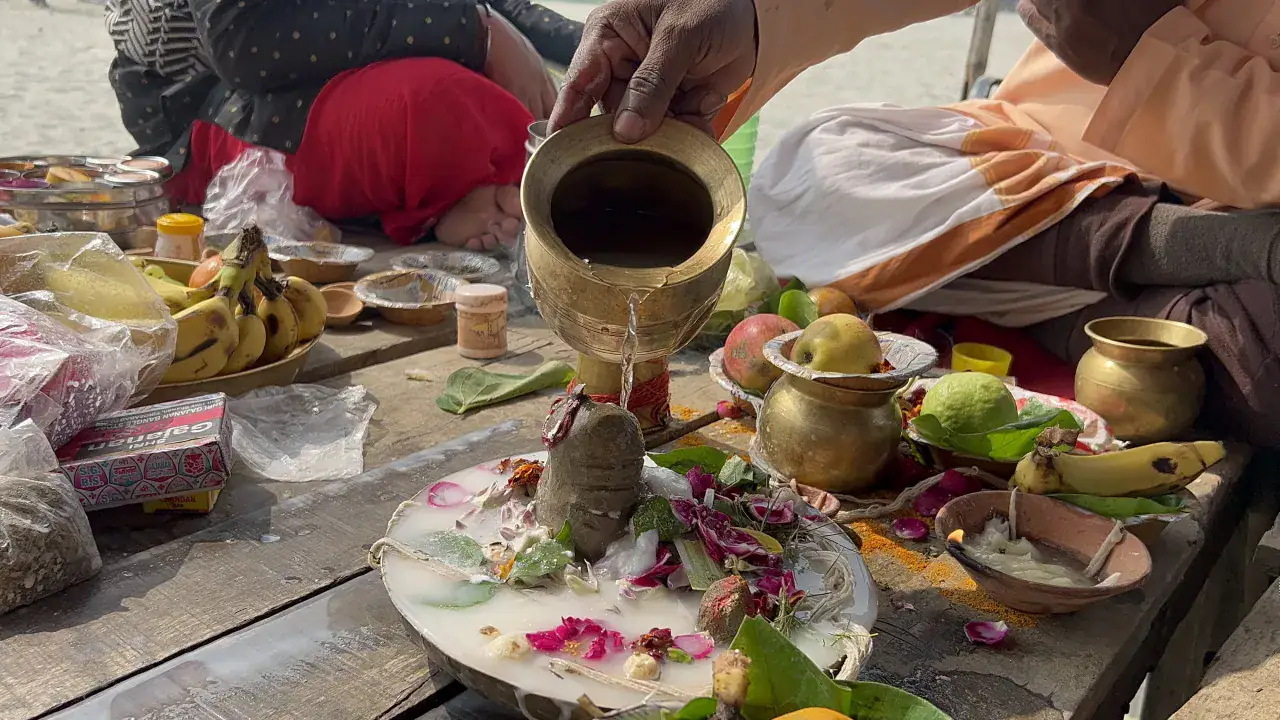
You will be guided before and during every rite.
Many families begin with questions, especially when a rite has not been performed for many years or family customs are no longer fully known. The pandit leads the mantras and actions; your part is to share the family details carefully and take part with attention and shraddha—sincere faith.
What each observance means, and when it may be included
These summaries explain customary practice. The observances included in a yatra vary, and the officiating pandit helps your family decide the performer, place, sequence and form for its sankalpa.
Begin with your family circumstances, not with assumptions
Who may lead a rite can vary with the relationship, family tradition (sampradaya) and the rite itself. The possibilities below are a starting guide; the officiating pandit considers your family’s circumstances before the person leading the rite is decided.
Begin with what your family knows
Gotra identifies a traditional lineage associated with an ancient sage (rishi) and is commonly named in the prayerful statement of purpose (sankalpa). If it is not known, do not guess. Share the family information you have and let the pandit advise the suitable wording.
Share these details before the ritual day
Share what is known; incomplete information is handled carefully, not filled in by assumption. The relevant details are reviewed with the pandit before the ceremony wherever possible.
Choose the date with dharma and family wellbeing in view
Tithi, Pitru Paksha, Amavasya and local sacred periods may all influence the date. The final choice should also consider elders, health, climate, crowds and current access, with the pandit's guidance at the centre.
Clarifications that help families plan with confidence
The sacred purpose leads the journey plan
Travel arrangements matter, but they are built around the rites—not the other way around. The pandit, family details, worship materials, timing and local access are considered together before the plan is presented.
Questions families often ask about the rites
If your circumstances are different, ask us privately.Tell us what your family wishes to understand or perform.
Share what you know in three short steps. We will review the journey and seek pandit guidance where needed before explaining the suitable next steps for your family.
Understand the yatra through its sacred places.
Rameshwaram, Kashi, Prayagraj and Gaya each hold a distinct place in the pilgrimage. Your route follows the sacred purpose of the family, together with current temple access and practical travel needs.