Skip to content
Kashi Rameshwaram Tour Packages Enquire
Home · Sacred cities · Prayagraj
PRAYAGRAJ · THE TRIVENI SANGAM

Prayagraj, where the yatra comes to the sacred confluence.

At Triveni Sangam, the Ganga and Yamuna meet in sight, while the Saraswati is revered as joining them unseen. Some Kashi–Rameshwaram traditions include sacred bathing (snan), ancestral offerings, or carrying sacred sand and water. Your family tradition and prayerful purpose (sankalpa) help the pandit decide the right order.
The Triveni Sangam at first light in Prayagraj
ROLE IN THE YATRA
A principal tirtha, planned as a day visit or overnight stay
SACRED FOCUS
Sangam darshan or snan, with rites advised for your family
ARRIVAL
Usually planned by road from Kashi, with travel time confirmed for your dates
COMFORT
Cooler months are generally easier; mela dates need extra planning
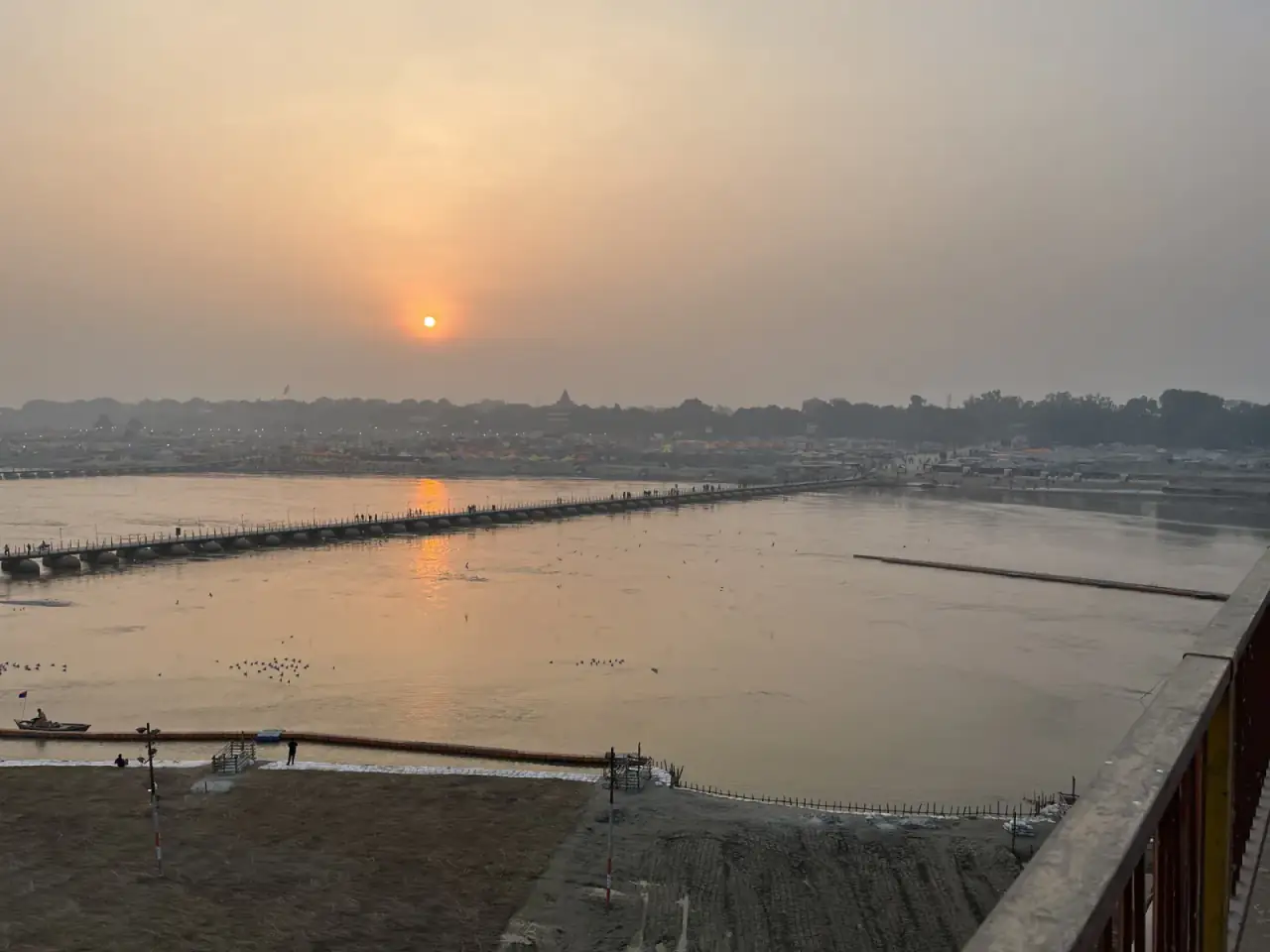
The Triveni Sangam at first light in Prayagraj
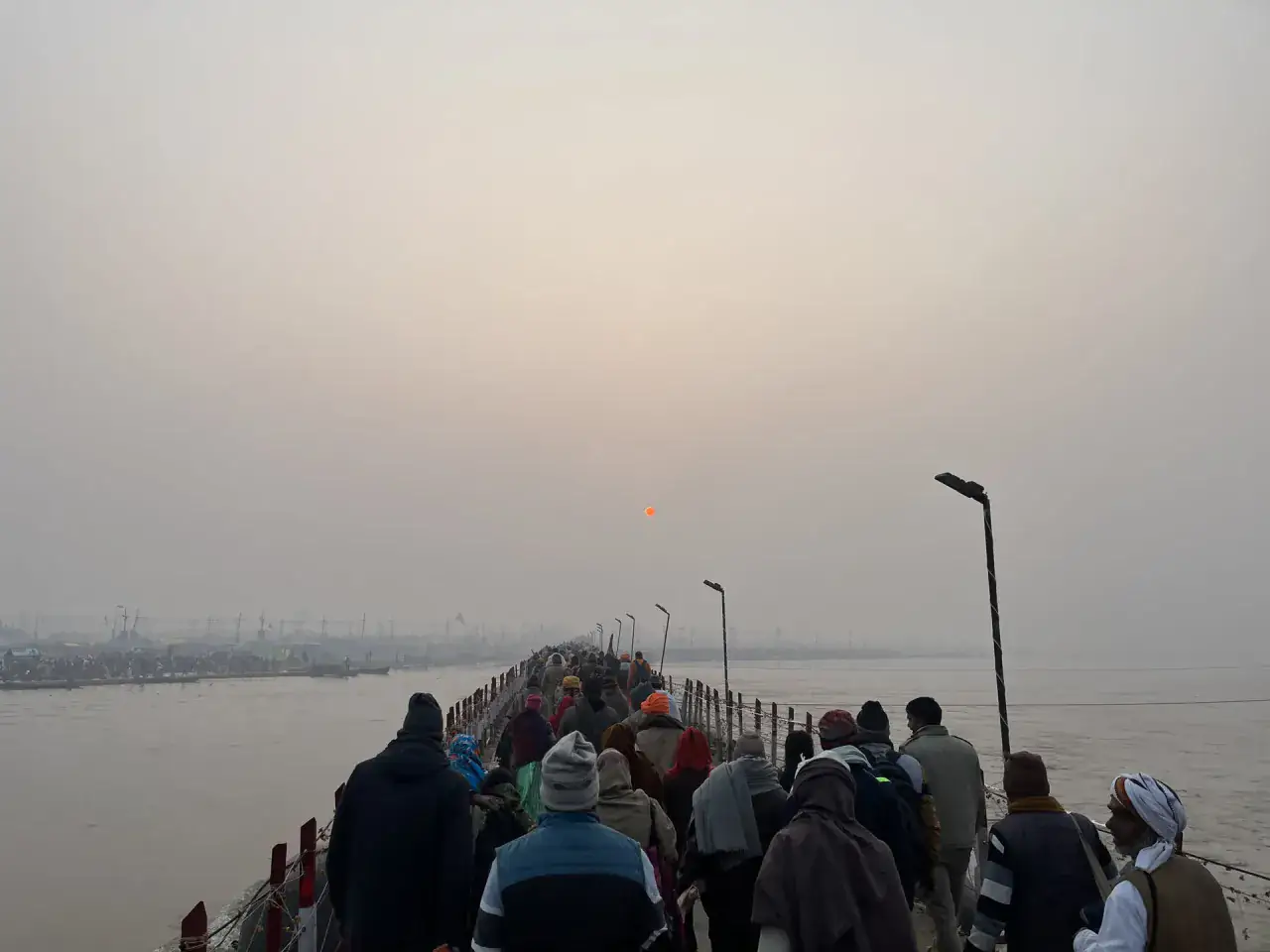
Pilgrims walking along a pontoon approach to the Sangam in morning mist
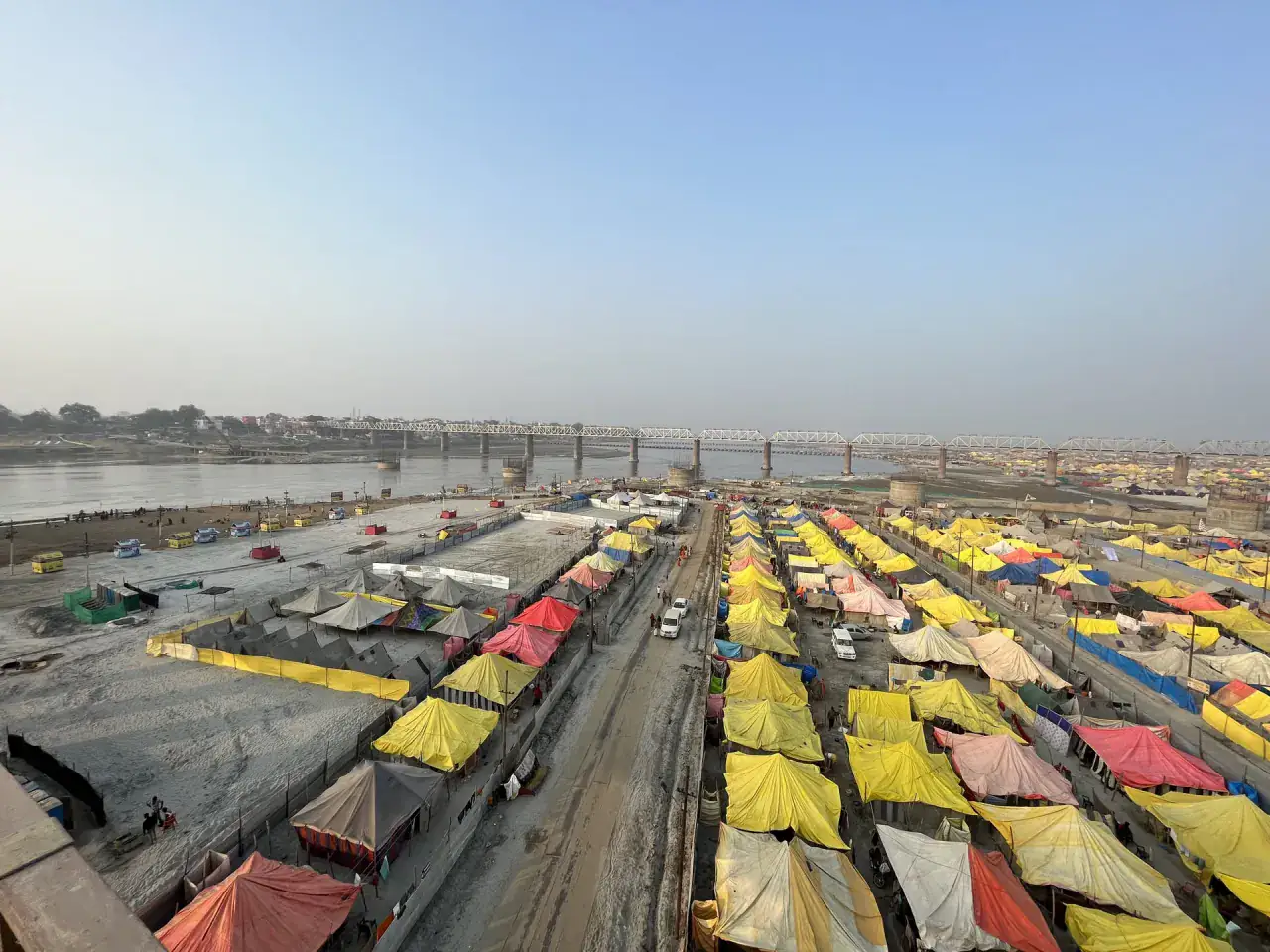
The seasonal pilgrimage tent city on the sands at Prayagraj
PRAYAGRAJ WITHIN THE COMPLETE YATRA

Usually reached from Kashi, with the pace chosen around your family

SACRED MEANING AND LIVING TRADITION

Prayaga is revered as Tirtharaja—the foremost meeting-place of sacred waters

The Prayaga Mahatmya in the Matsya Purana praises Prayaga as Tirtharaja, the foremost among sacred confluences. Tradition remembers it as a kshetra associated with Brahma's yajna, while the lunar month of Magha holds special sanctity for snan, prayer and disciplined observance.
Gaṅgā-yamuna-saṅgamam
The expression names the meeting of the Ganga and Yamuna; Hindu tradition reveres the Saraswati as joining them beyond ordinary sight. This faith is what gives the Triveni its name and contemplative depth.
MATSYA PURANA · PRAYAGA MAHATMYA
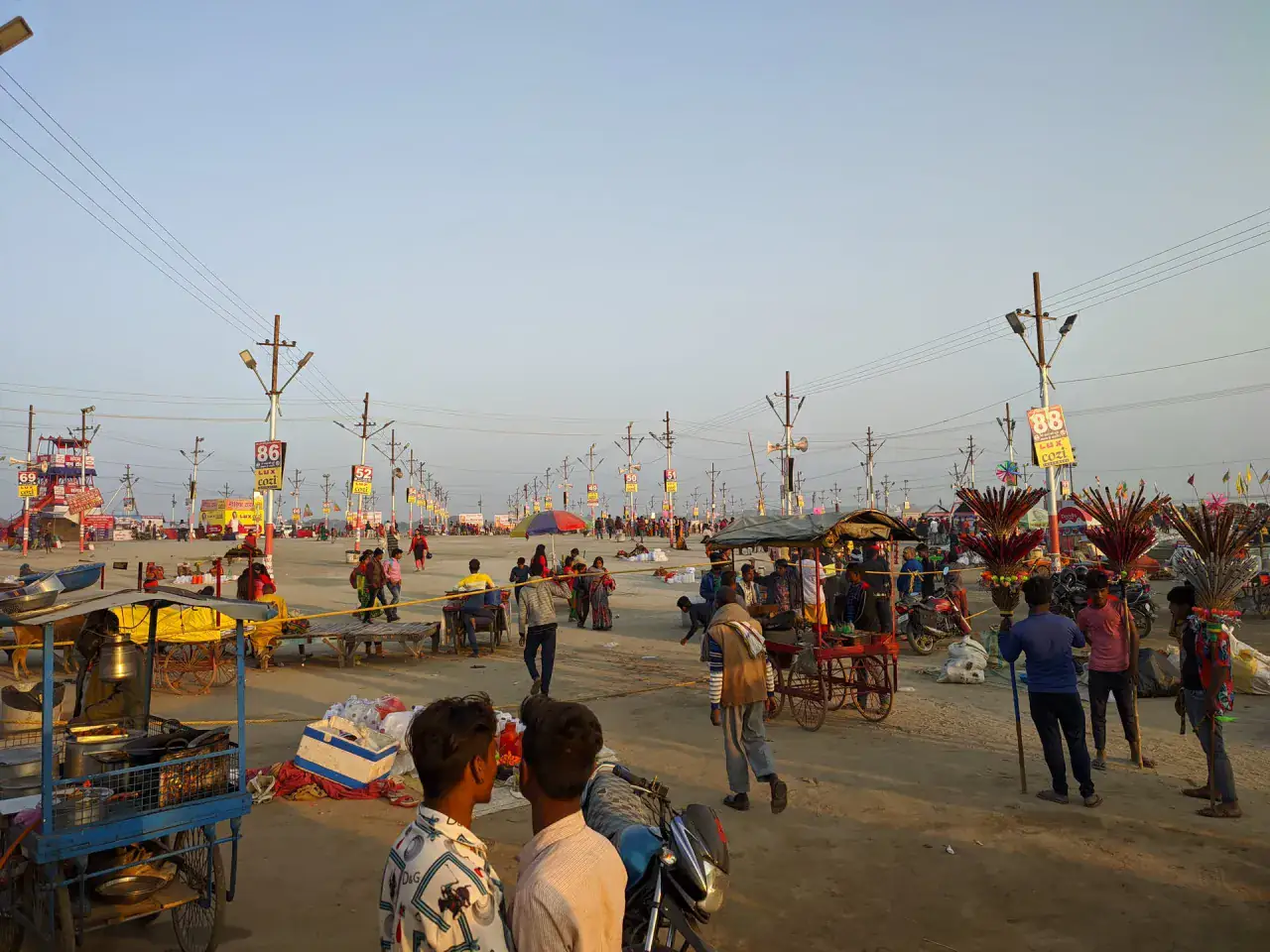
Pilgrims gathered on the Sangam sands in Prayagraj
HOW THE SANGAM MAY ENTER YOUR YATRA

The observance is shaped by your sankalpa, family tradition and the river on that day

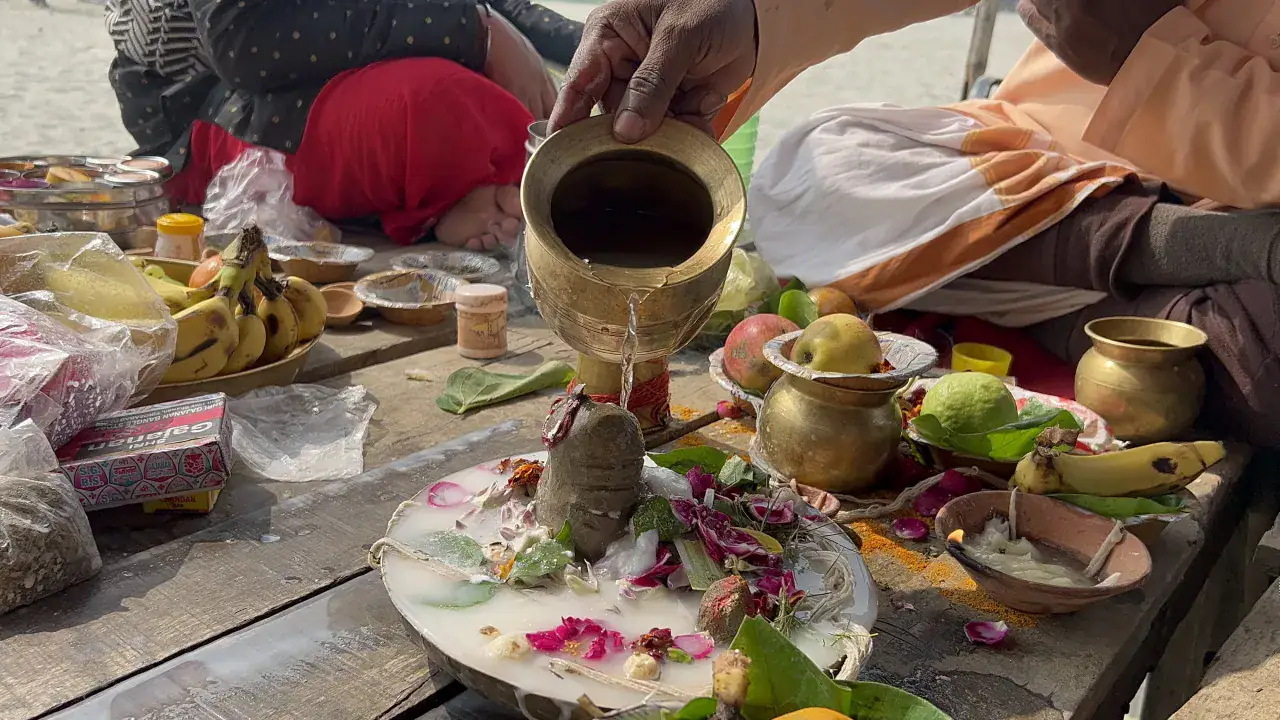
For some families, Prayagraj is a visit for darshan and sacred bathing. Others include a water offering for the ancestors (tarpana), Shraddha, or a Setu–Ganga custom involving sacred sand and water. A knowledgeable pandit can explain what belongs in your family’s journey before travel.

AT THE SANGAM WHEN ADVISED
Darshan, snan and remembrance
A family visit may include darshan of the confluence, a sankalpa, arghya, tarpana, snan or a carefully advised ancestral observance. Full immersion and every named rite are not necessary for every pilgrim.
Reach the safest approved ghat or boarding point for that day
Make the sankalpa with names, gotra and purpose where applicable
Offer arghya or tarpana under the pandit's guidance
Take full, partial or symbolic snan according to health and conditions
Complete family-specific Shraddha only when it belongs in the agreed sequence
IN SOME CIRCUITS CUSTOM, NOT UNIVERSAL
Carrying sand north and sacred water south
Some Setu–Ganga traditions release sand brought from Rameshwaram and carry sacred water south for abhisheka. It is included when it belongs to the family's chosen tradition, rather than being assumed for every Kashi–Rameshwaram circuit.
Confirm beforehand whether this custom belongs to your family's chosen form
Keep any sacred material labelled, sealed and respectfully carried
Release sand only at the place and in the manner advised locally
Collect water only when access, cleanliness and onward travel permit
Carry it south for abhisheka only if it is part of the agreed sequence
Our rituals guide explains the common observances in simple language. The pandit will help decide your family’s prayerful purpose, who may lead each rite and the order in which it is performed. Read the family rituals guide →
REACHING THE SANGAM SAFELY

A safe, reverent Sangam visit begins with the river as it is that day

A boat can bring a family closer to the confluence when authorities, weather and river conditions permit. During high water, fog, heavy crowds or restricted movement, the observance may be moved to a safe ghat or bank. Sacred intent never requires unsafe boarding or immersion.
The day's river plan The safest boarding point and place for the observance are chosen with the day's water level, weather, crowds and local guidance in mind.
Boarding Boats may involve uneven sand, a sloping bank and a moving step. Tell us about knees, balance, wheelchair use or recent surgery before the plan is finalised.
Life jackets Use a properly fitted life jacket and an authorised, appropriately loaded boat. Follow the boat operator's and local authority's instructions throughout.
Snan A full dip is not the only respectful option. Sprinkling sacred water, a partial snan or bank-based prayer may be advised for health, safety or river conditions.
Privacy and changing Facilities vary by ghat and season. We plan a practical changing arrangement in advance and recommend carrying a modest full change of clothes in a waterproof bag.
Ritual offerings arranged for a puja in Prayagraj
ARRIVAL AND LOCAL MOVEMENT
From Kashi
Road travel is the usual connection within this circuit. Departure time and whether to return the same day are chosen around traffic, fog, mela controls and your family's stamina.
Rail and air options
Available connections change by date. We compare them with the road journey from Kashi before recommending the simplest arrival for your full route.
To the water
The most suitable ghat or boarding side depends on river level, access restrictions, vehicle movement and crowds. The meeting point is confirmed near the visit.
Fog and mela traffic
Winter fog and major bathing dates can add substantial time. A good plan leaves extra time and keeps a safe alternative rather than asking elders to hurry.
SACRED PLACES AND OPTIONAL HERITAGE

Sacred places that can be added around the Sangam

The Sangam is the principal tirtha. Nearby temples and heritage places can be added according to opening times, your family's pace and what carries meaning for you; there is no need to rush through every stop.

Triveni Sangam PRINCIPAL TIRTHA
The meeting of the Ganga and Yamuna, with Saraswati revered as joining unseen. Your visit may be a quiet darshan, a safe form of snan, or a family-specific observance guided by the pandit.
Beni Madhav (Veni Madhava) Temple VISHNU TRADITION
A revered form of Vishnu within Prayagraj's Madhava tradition. It may be included for darshan when its location, opening hours and your family's pace fit the day.
Bade Hanuman Ji NEAR THE SANGAM
This much-loved temple is known for its reclining form of Hanuman Ji. Access can become crowded and seasonal river conditions may affect the approach, so darshan is planned around current arrangements.
Akshayavat and Patalpuri FORT PRECINCT
Akshayavat, the revered 'undying' banyan, and Patalpuri Temple belong to the fort precinct. Security, entry route and opening access can change and should be verified for your dates.
Alopi Devi Temple SHAKTI TRADITION
A deeply respected local Shakti temple whose sanctum centres on a revered wooden form rather than a conventional murti. It is an optional darshan, not a compulsory circuit stop.
Mankameshwar Temple SHIVA DARSHAN
A Shiva temple near the Yamuna and fort area. It can provide a quieter darshan when opening times and the day's river plan allow.
Anand Bhavan HERITAGE OPTION
The former Nehru family residence is now a museum associated with India's freedom movement. Families interested in modern history may add it without compressing sacred visits.
Khusro Bagh HERITAGE OPTION
A walled Mughal garden and tomb complex that can be visited when time and interest permit. Current opening hours and local access should be checked before adding it.
MEALS DURING THE YATRA

Simple meals chosen around your family's observance and health

Fasting and meal customs differ by family and rite. Tell us what your pandit or doctor has advised; satvik, no-onion or no-garlic food can be requested, while medicines, hydration and dietary restrictions remain part of the plan.
A gentle satvik meal Simple dal, vegetables, rice or roti can be arranged around the observance, with no-onion, no-garlic and medical preferences requested in advance.
Prayagraj guava A celebrated seasonal fruit of the region. Choose washed, freshly cut fruit only when it suits your digestion and medical advice.
North Indian vegetarian Dal, seasonal vegetables, paneer and breads are readily available; spice, oil, onion and garlic preferences should still be stated clearly.
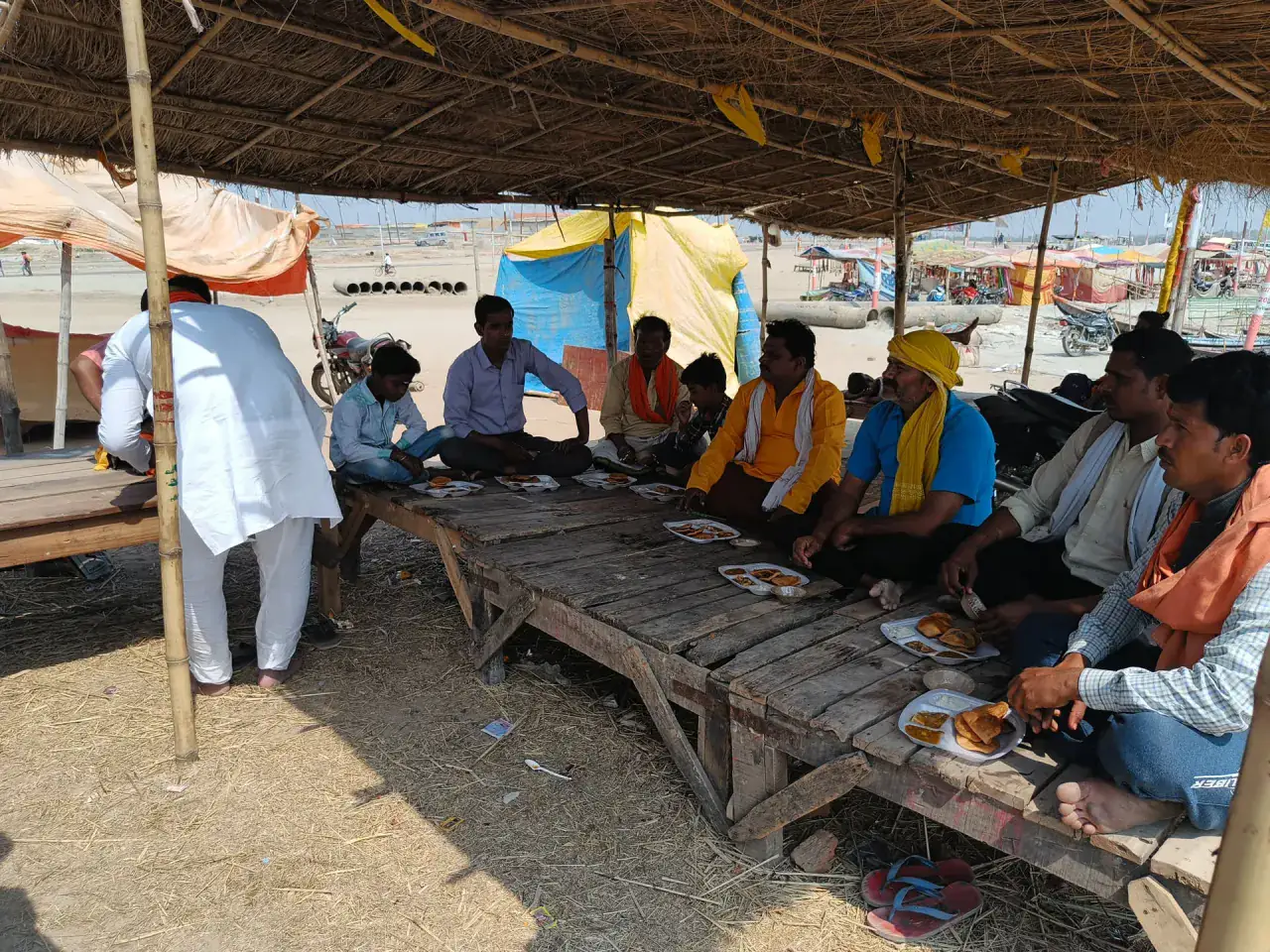
Local breakfast Kachori, sabzi, samosa and jalebi are popular, but they are optional pleasures after the observance—not part of any ritual requirement.
Drinks and hydration Use safe drinking water throughout. Choose lassi or warm drinks from a hygienic source according to the weather and your family's dietary needs.
A pilgrimage group sharing a meal beneath a shelter in Prayagraj
SACRED CALENDAR AND SEASONS

Choose dates by sacred calendar, river conditions and family comfort

Magha and major mela periods carry special meaning, while their dates, entry routes and riverfront arrangements change from year to year. Many families prefer a quieter window. We check the current calendar, river level and local advisories before suggesting dates.

Magh Mela LUNAR DATES
The annual Magha observance brings kalpavasis, major snan days and extensive temporary arrangements. Dates and access controls must be checked for the relevant year.
Kumbh-period gatherings CALENDAR-BASED
Major Kumbh gatherings transform transport, accommodation and river access. Families travelling then need a slower pace, clear meeting points and arrangements made well in advance.
Kalpavasa DURING MAGHA
Kalpavasa is a disciplined period of residence, bathing, prayer and simplicity—not merely a tent-city experience. Families may learn about it without treating it as sightseeing.
Cooler months OCT–MAR
These months are often more comfortable, though cold water, winter fog and major bathing dates can still change the safest plan.
Monsoon DATES VARY
Higher water and changing currents may alter or suspend boat access. A bank-based darshan or symbolic snan should remain an acceptable alternative.
Major snan days DATES VARY
Kartik Purnima and other sacred dates may draw additional pilgrims. The actual lunar date and local advisories are verified before travel.
MONTH BY MONTH
MONTH
WEATHER
CROWDS
WHAT IT MAY MEAN FOR YOUR VISIT
January
Cool to cold; fog possible
Variable
Magha-related dates can transform access and crowd levels. Verify the year's calendar before choosing a day.
February
Cool mornings; milder days
Variable
Magh Mela may continue according to lunar dates. Conditions can change considerably after major bathing days.
March
Mild to warm
Moderate
Often comfortable, but Holi-period movement, local events and rising daytime heat should still be considered.
April
Hotter, especially midday
Quiet
An early, shorter visit is usually gentler. Shade, hydration and heat-sensitive medicines need attention.
May
Very hot
Quiet
Heat can make exposed sand and boarding difficult for elders. Consider a brief bank-based observance.
June
Hot and increasingly humid
Quiet
Plan gently around heat and pre-monsoon weather. Boat access depends on river and weather conditions.
July
Monsoon; humid
Variable
River levels may rise and authorities may restrict access. Keep a safe ghat or bank alternative in the plan.
August
Monsoon rain; humid
Variable
High water can alter ghats, roads and boat operations. Follow official directions on the day.
September
Warm; rain may continue
Variable
Pitru Paksha dates vary and may increase demand for ancestral rites. Confirm tithi, pandit and river access early.
October
Generally clearer and milder
Moderate
Often a practical month, though river access and festival dates should still be checked.
November
Cooler mornings; pleasant days
Variable
Kartik Purnima and other dates may increase bathing crowds. Verify the actual lunar calendar.
December
Cold mornings; fog possible
Moderate
Leave generous extra time for road and train journeys. Cold-water immersion may be unsuitable for some travellers.
HEALTH AND SAFETY

River safety and elder comfort come before any fixed form

Prayagraj can be planned with a boat or without one. The safest available form is chosen after considering river notices, weather, crowd controls, mobility and each traveller's health.

River and local guidance
Boat operation and the place of worship follow current local directions. When the river cannot be approached safely, the family is guided through a reverent bank-based form.
Life jackets and capacity
Every passenger should use a properly fitted life jacket. Do not board an overloaded or unauthorised boat, even if the river appears calm.
Mobility and boarding
Uneven sand, slopes and moving boats can be difficult after knee surgery or with poor balance. Share mobility needs early so the visit can be adapted.
Snan alternatives
Full immersion is optional when health or safety advises against it. Sprinkling water, a partial snan or prayer from the bank can preserve reverence without unnecessary risk.
Cold, heat and sun
Carry warm dry layers in winter and protect against heat and sun in warmer months. The ritual should be shortened or adapted when the body needs it.
Mela crowd plan
Agree on a meeting point, contact method and walking limit before entering a major gathering. Keep elders and children with a known family member.
Medicines and hydration
Carry prescribed medicines in hand, use safe drinking water and do not extend fasting against medical advice. Share serious conditions privately during planning.
Emergency preparation
Keep identification, prescriptions, insurance details and emergency contacts accessible. Current nearby medical options are noted for the actual travel dates.
PRACTICAL PLANNING

What your family should know before visiting the Sangam

Start time
Departure is confirmed close to the visit after checking fog, traffic, mela controls, river access and your family's preferred pace.
What to wear
Choose modest clothing suitable for prayer and movement. If snan is planned, use garments that remain secure when wet and carry a warm layer in winter.
Carry a change
Keep a towel, full change of clothes, waterproof bag and any needed mobility aid with your own party.
Sacred sand or water
Carry these only if they belong in your agreed tradition. Container, sealing and airline rules are checked before the journey continues.
Day visit or overnight
An overnight stay may suit elders or a longer observance; a day visit may suit a simpler Sangam stop. The choice follows the complete route, not a fixed package rule.
Photography
Ask before photographing pandits, boat staff or other families. Never record a private ancestral rite or a person changing or bathing without clear permission.
PLAN YOUR PRAYAGRAJ VISIT

Tell us what your family hopes to do at the Sangam.

Share your travel window, family needs and any observance you have in mind. We will help shape the Prayagraj visit within a clear, custom Kashi–Rameshwaram itinerary.

Your family receives a custom route rather than a fixed, one-size-fits-all sequence.
The pandit helps confirm the observances that belong to your family.
We plan boats, mela movement and temple visits around the conditions on your dates.
01 PURPOSE
02 JOURNEY
03 CONTACT
What kind of yatra are you planning?
Choose the closest option. It is perfectly fine to be unsure; the details can be discussed with the pandit.
NEXT ON THE CIRCUIT

From Prayagraj, your family may continue to Gaya—or follow its chosen circuit.

Gaya carries a profound ancestral tradition. Families include it when their purpose and tradition call for those rites; others may follow a different route. Explore the city, or ask us to shape the complete journey around your purpose.

Planning support for your complete Kashi–Rameshwaram journey.