
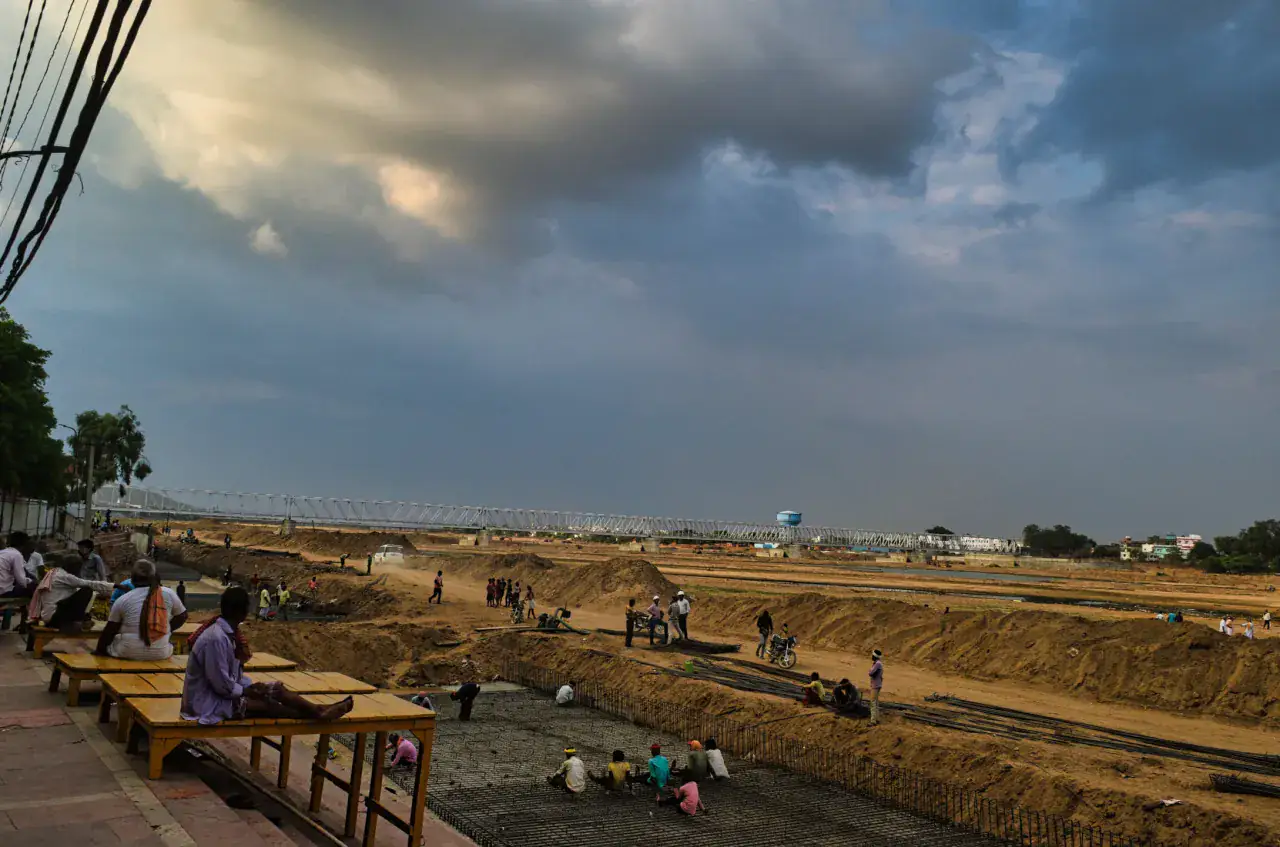
Gaya is approached as a Pitru Kshetra—a sacred field for remembering and honouring one's ancestors. For many families, the ritual day here is a central purpose of the journey. It may include worship at Vishnupad, offerings connected with the Phalgu and prayer beneath Akshayavat, but the exact form is not identical for every family.
The morning becomes calmer when its sacred meaning and practical needs are both understood in advance. Your Gayawal pandit confirms the sankalpa and sequence; the itinerary should then protect the family's time, health, privacy and need for rest.
Why Gaya and the Phalgu are sacred
The Vayu Purana's Gaya Mahatmya praises Gaya as a foremost place for ancestral observances. Its sacred geography is connected with Gayasura, the presence of Vishnu at Vishnupad and the many places where pindas—ritual offerings prepared for the ancestors—are offered with shraddha.
The Phalgu is part of this living sacred landscape. Its broad sandy bed is often visible, while surface water changes with season and river conditions. Pilgrims should not arrive expecting one permanent appearance. The location and manner of the observance are settled locally for the day.
A beloved Gaya katha also remembers Sita making an ancestral offering beside the Phalgu when Sri Rama was away. The Phalgu, cow, tulsi, a Brahmin and Akshayavat were called as witnesses; in the familiar telling, Akshayavat alone upheld the truth and received an enduring blessing. Regional versions differ, but the katha helps families understand why the river and the undying banyan are remembered together.
What is confirmed before the ritual morning
The family should not wait until reaching the riverbank to resolve its basic questions. Before the day, confirm who will perform, for whom the rite is intended, the tithi or chosen date, gotra where known, any earlier rites and the family's sampradaya.
The pandit can then explain the sankalpa, fasting or dietary observance, clothing, ritual materials and whether relatives who are not performing may sit nearby or participate in another way. Temple entry and local restrictions should also be checked near travel, since phone, bag, leather-item and access arrangements can change.
If a family member has diabetes, a heart or respiratory condition, limited mobility, heat sensitivity or medicine that must be taken with food, disclose this while planning. The pandit can guide what is ritually appropriate; a qualified clinician should guide what is medically safe.
One common shape of a Gaya ritual day
The following is an orientation, not a fixed timetable. The starting site, number of locations, order and duration can vary with the family's rite, the Gayawal tradition, temple access, weather, crowds and the number of participants.
Some families complete the principal rites in one day, while others follow a longer Gaya observance across additional sacred places (vedis) or over more than one day. Your family’s form should be decided with the Gayawal pandit before the sacred morning, with the purpose and any added arrangements explained clearly.
- 01
Meet the pandit and review the sankalpa
Confirm names, relationships, gotra or the advised unknown-gotra form, the purpose of the rite and any health or participation limits.
- 02
Vishnupad and the designated opening observance
Where included, approach the temple and undertake the advised worship or Pind Daan according to current entry and darshan arrangements.
- 03
Phalgu observance
At the location suitable for the day's river conditions, the pandit guides pinda offerings, tarpana or other ancestral prayers included for the family.
- 04
Akshayavat, where included
The sacred banyan may form the concluding or another important stage of the family's Gaya sequence. Its position in the rite is confirmed by the pandit.
- 05
Darshan, completion and dana
Complete the prayers, giving and any final instructions without rushing the family through an emotional moment.
- 06
Change, meal and rest
Follow the advised conclusion of fasting, change or wash as needed, take the planned meal and keep the next part of the day gentle.
Fasting, medicines and the first meal
Fasting rules differ by rite, performer and tradition. Do not assume that every traveller, child or elder must remain without food or water for the same period. Ask who is expected to fast, when water is permitted, how regular medicines should be handled and what marks the proper conclusion of the observance.
Medical needs are not a test of devotion. Continue prescribed medicine and respond to symptoms according to personal medical advice, even when a ritual fast is being observed. Ensure the pandit and coordinator know the agreed plan before the morning begins.
The first meal is usually best kept simple and satvik, with allergies, diabetes, low-salt needs and familiar foods considered beforehand. Its exact timing depends on completion of the family's rite; it should not be tied to a promised clock time.
Heat, rain, sand and walking
Gaya can involve exposed ground, uneven sand, barefoot temple areas, vehicle-to-site walks and periods of sitting low for ritual. Warm periods can be tiring; rain and surface water can change the approach to the Phalgu. Pitru Paksha and festival periods can add queues and longer walking routes.
Prepare modest clothing suitable for the rite and current temple requirements. Depending on season and family needs, the day bag may include a dry change, prescribed medicine, permitted drinking water, sun or rain protection, a light cloth for dust, and any mobility aid confirmed as practical for the route.
Ask in advance about vehicle proximity, steps, seating, toilets, changing arrangements and where a non-performing family member may wait. Mats, chairs, umbrellas or hands-on assistance should be described as requested or confirmed arrangements, not guaranteed facilities at every sacred point.
Supporting children, elders and slower walkers
Not every family member needs to move at the same pace. Decide who must be present for each stage, who can rest nearby and who will assist a child or elder without distracting the performer during the sankalpa.
Keep one family contact responsible for medicines, documents and communication. Agree on meeting points before entering a busy temple or river approach. If the weather, crowd or a traveller's condition changes, pause and seek local guidance rather than forcing completion to match an online schedule.
The yatra can be customised around arrival time, rest, an additional Gaya day or a simplified non-ritual afternoon, while the sacred observance itself remains under the pandit's guidance.
The emotional character of the day
Ancestral rites can bring grief, gratitude, relief or quietness to the surface. Every response is personal: some people weep, some remain composed, and some understand the day only later. There is no single emotion that your family is expected to show.
What helps is unhurried space. Avoid placing a tight sightseeing schedule immediately after the rite. Let the family eat, rest and decide whether it wishes to visit Bodhgaya or another place later. Bodhgaya can be a meaningful addition to the journey, but it is not a compulsory continuation of the ancestral observance.
A well-planned Gaya day does not remove its seriousness. It allows the family to give full attention to the names being spoken, the pindas being offered and the prayer with which it has come.