
A visit to Rameshwaram Temple for senior citizens can be planned more gently when the family begins with the person's actual walking, balance, standing, changing and rest needs. Do not assume that age alone decides suitability, or that a listed wheelchair removes every physical demand. First decide whether the person hopes to join only the darshan or also Agni Theertham and the twenty-two-well bath.
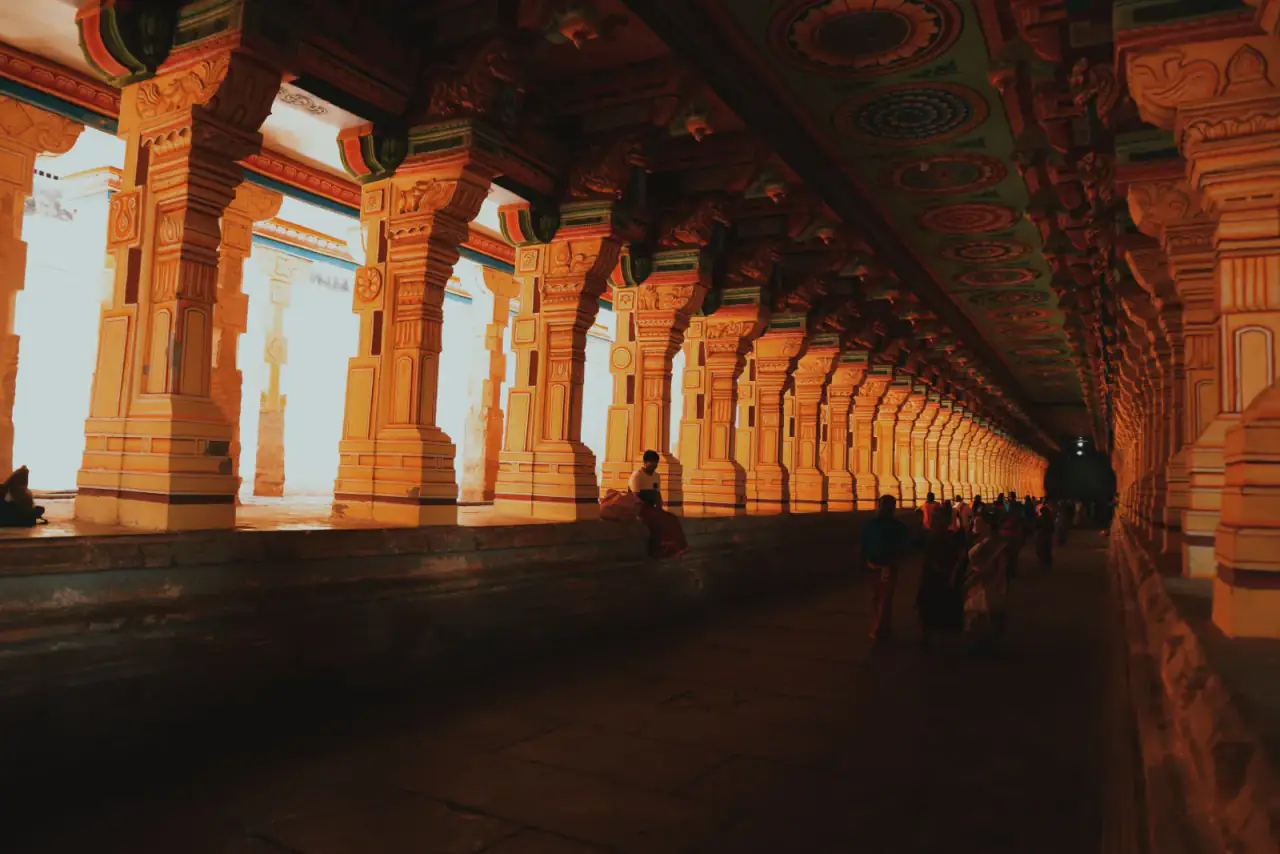
Wheelchairs may be taken inside Ramanathaswamy Temple. Most of the internal darshan route, especially the broad corridors, is clear for wheelchair movement, although occasional rises, drops, steps and uneven portions can require careful assistance. A temple wheelchair may be requested from the staff at the East Gate, subject to availability.
For a senior traveller, we treat the applicable paid special or quick darshan ticket—often called VIP darshan by visitors—as an essential part of planning because it can reduce the ordinary queue burden. Travellers may book temple tickets directly through the temple's official government website, or ask us to arrange them. Families booking with us should also share the wheelchair need while booking. We can arrange a wheelchair for inside-temple darshan, but this does not include a dedicated helper; one family companion must remain responsible for hands-on support. A doctor should guide personal health and medication decisions, while any ritual change belongs with the family's pandit.
Choose the shape of the visit before choosing the time
See the complete temple morning before deciding what feels manageable
Arrive with time to rest
Avoid turning a long transfer and the temple morning into one continuous stretch when the itinerary can be adjusted. Settle into a nearby hotel, understand the gate plan and prepare clothes, medicine and the family meeting point before sleeping.
Leave footwear and prepare for Agni Theertham
The official locker and footwear arrangement is in front of the East Gate, and the main path towards Agni Theertham begins on this side. Temple wheelchairs are also requested from the staff here and remain subject to availability. Keep the locker token and essential medicine with one responsible companion.
Approach the sea without haste
The shore adds open-air walking, wet clothing and changing footing. Stay beside anyone who needs balance support, follow the conditions on the day and do not rush simply to keep pace with another group.
Move through the twenty-two-well circuit
The well-bathing route is on the North Gate side. It involves repeated water, wet stone and group movement. The practical question is not only whether a person can enter, but whether the entire wet sequence can be completed with dignity and steady support.
Regroup, collect belongings and change
Pilgrims normally leave the well route through the South Gate. Include the return around to the East Gate belongings and the short journey to the hotel in the plan. A nearby room is the most dependable private place for an elder to sit, change and recover.
Return dry and keep the rest of the day light
Come back for darshan in dry temple clothing when that is the family's plan. Use the current paid special or quick darshan arrangement planned for the senior, while still leaving a margin for waiting and corridor movement. Then protect a real rest period instead of filling the afternoon with every optional sightseeing stop.
The demanding part is the combination, not one dramatic obstacle
A person may comfortably walk through a hotel lobby or stand for a few minutes at home and still find the complete temple morning tiring. Waking earlier than usual, travelling before breakfast, depositing footwear, walking in a crowd, becoming fully wet, waiting again and changing clothes place different demands one after another.
Ask about the longest comfortable walk and standing period on an ordinary day, but also ask what happens after the person is wet or tired. Someone who uses no aid at home may still appreciate an arm for balance. Someone who uses a wheelchair for distance may be able to walk a short dry section but not a wet, crowded one. Let the traveller describe what feels safe and dignified.
Avoid making the decision for an elder in front of the whole group. Explain the stages calmly, offer practical choices and allow the person to say which parts matter most. A gentler yatra protects participation; it does not treat the traveller as a problem to be managed.
Plan by the person's comfort and ability, not by age alone
- The official Ramanathaswamy Temple facilities page currently lists a wheelchair and a battery vehicle among its facilities.
- The official list also includes an information centre, a medical facility, RO drinking water, accommodation, footwear storage and toilets at identified areas around the temple.
- The official information does not announce a permanent free senior-citizen priority queue. Its paid service list instead uses names such as special darshan and quick darshan, which should be confirmed for the visit date.
- The official page does not publish real-time wheelchair availability or chair numbers. Current local guidance is to ask the temple staff at the East Gate, while keeping a fallback because availability remains limited.
- The official page does not map the complete battery-vehicle route. Current local guidance is that a battery vehicle or auto may bring a traveller to approximately 200–500 metres from the gate, depending on the crowd, time and vehicle controls.
- Treat all facility information as current guidance to recheck, not as a promise for a future date.
What wheelchair movement is usually like inside the temple
Wheelchairs are permitted inside Ramanathaswamy Temple, and most of the internal darshan route is clear for wheelchair movement. The long corridors are the easiest part of this movement. The route is not completely level or step-free: occasional rises, drops, stairs and uneven portions may require a companion's help.
The floor is largely old stone and is usually clean and pleasant to move across. It can feel cool even on a hot summer day, and fans are available in parts of the temple. Wet areas, crowded turns and uneven sections still deserve a slower pace.
If travelling independently, ask the temple staff at the East Gate for a wheelchair; availability is not guaranteed. If travelling with us, share the requirement while booking so a wheelchair for inside-temple darshan can be arranged. The arrangement does not include a dedicated helper, so one family companion must provide hands-on assistance. Wheelchair use is not confirmed for the twenty-two-well circuit because parts of the wet path are unsuitable for wheelchair travel.
Only the traveller and their doctor can decide whether sea bathing, the twenty-two wells, fasting, heat, an early start or prolonged standing is medically suitable. Share the actual plan with the doctor whenever there is a concern.
Plan the paid darshan ticket before arrival
For families travelling with seniors, we regard the suitable paid special or quick darshan ticket as an essential part of the temple plan. Visitors often call this VIP darshan, while the official service list uses names such as special darshan and quick darshan.
The ticket can reduce the burden of the ordinary queue, but it does not guarantee immediate entry, remove security checks or make the entire route step-free. The current service, fee, availability and reporting point should be confirmed for the travel date.
Temple tickets can be booked directly by the traveller through the temple's official government website. When the yatra is booked with us, tell us about the senior traveller and wheelchair requirement during booking; we can arrange the applicable ticket and a wheelchair for inside-temple darshan when asked. The wheelchair arrangement does not include a dedicated helper, so a family companion must remain responsible for hands-on assistance. Physical ticket purchase and temple-wheelchair requests are also available in the East Gate area, subject to the arrangements operating that day.
Allow for the final approach and planned resting pauses
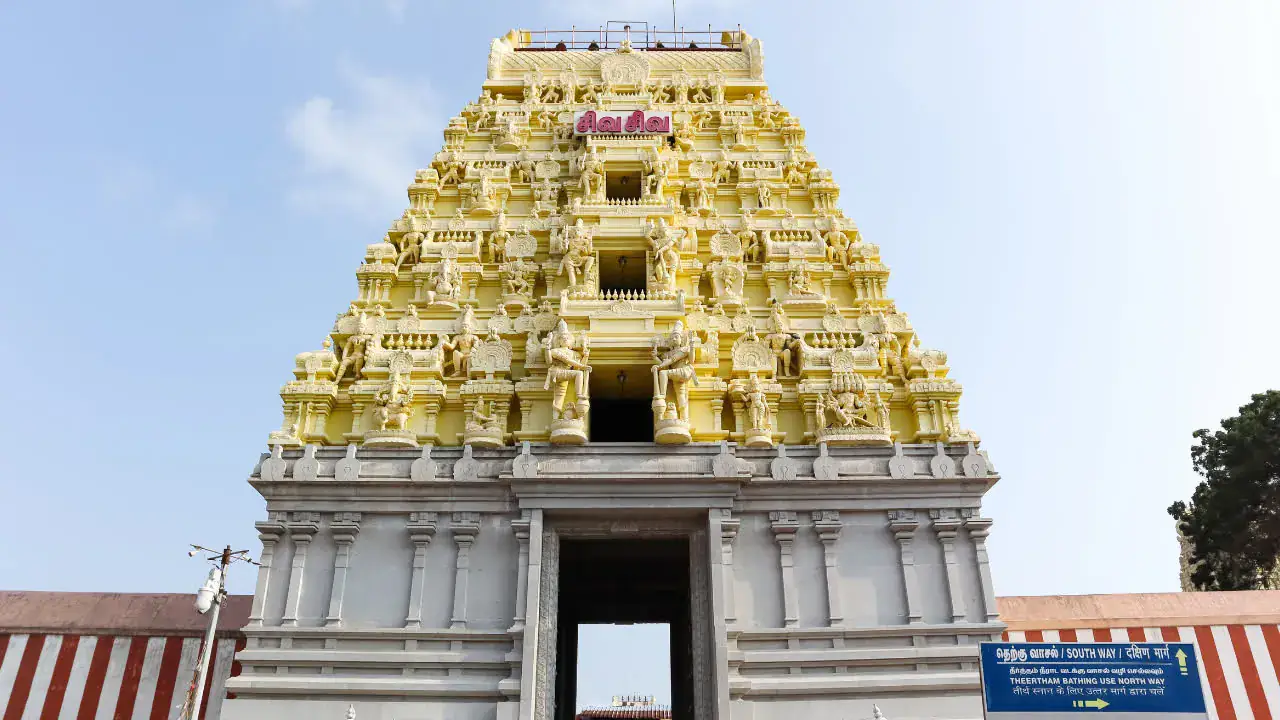
A battery vehicle or auto can usually bring a traveller to within approximately 200–500 metres of the temple gate. The actual stopping point changes with the crowd, time of day and vehicle controls, so the family should be ready for the remaining approach instead of treating one distance as guaranteed.
Resting opportunities are available at intervals inside the temple. Families may find raised stone or pillar-side platforms, step-like sitting places and occasional benches. A particular seat may be occupied or outside the day's route, so pause when a suitable place is available rather than waiting until the traveller is exhausted.
Keep one companion beside the wheelchair user across level changes and crowded turns. Take a rest without blocking the pilgrim route, follow temple-staff directions and allow enough time that the family never has to choose between rushing and abandoning the visit.
If the elder hopes to join Agni Theertham and the 22 wells
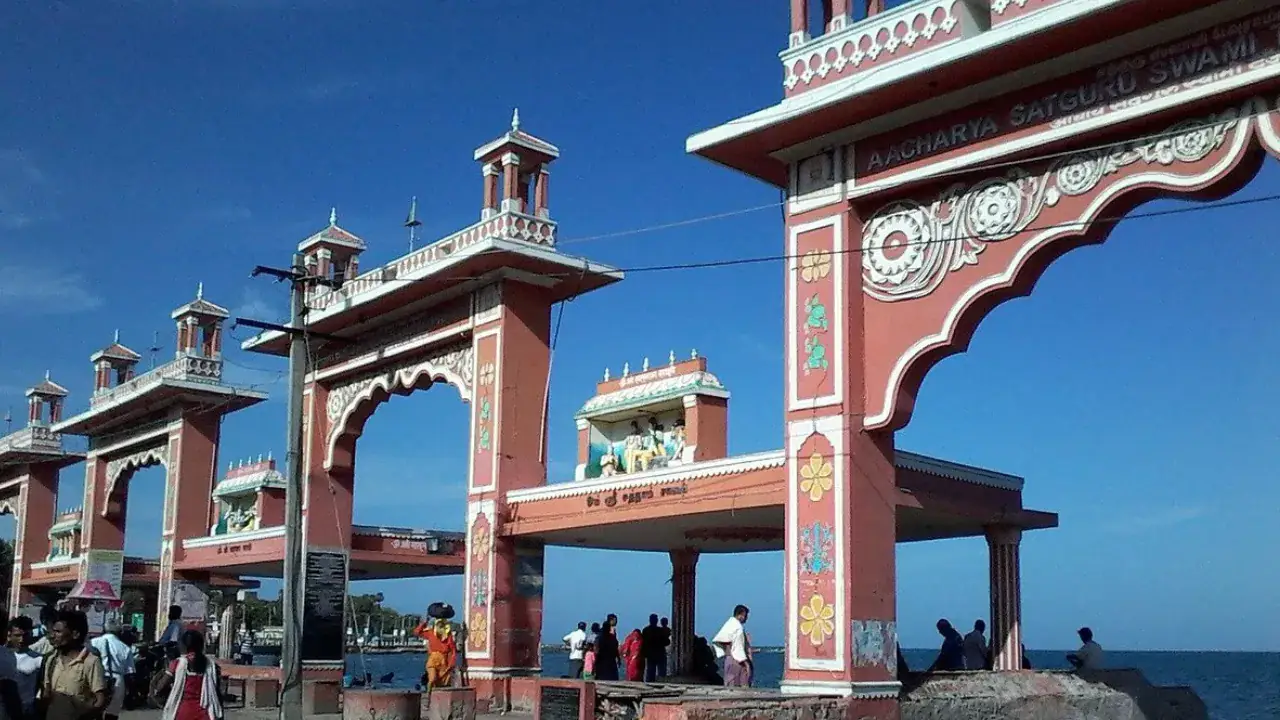
Discuss the wish respectfully before travel. The route combines the East Gate-side shore, the North Gate-side well circuit and the normal South Gate exit. It should not be introduced as a quick addition after the family has already reached the water.
Choose secure, modest bathing clothes that do not become difficult to manage when wet. Keep one steady family member beside the traveller, allow other pilgrims to move ahead and avoid carrying a dry-clothes bag through the water route. Essential medicine should remain protected and reachable with the responsible companion, subject to current entry instructions.
If the complete bathing sequence does not appear suitable, do not invent a substitute from a travel blog or tell the person that devotion requires endurance. Explain the practical concern to the family's pandit and ask what is appropriate for that family's sacred intention, or sankalpa. Medical suitability remains a separate conversation with the person's doctor.
Plan the changing break as part of the sacred morning
There is no dependable private changing room after the twenty-two wells, and occasional shared spaces should not be treated as an assured arrangement. For an elder who needs a chair, privacy, dressing help, regular medicine or time to become warm and dry, a nearby hotel is the most dependable option.
After the South Gate exit, the family may need to return around to the East Gate facility for footwear and belongings before going to the hotel. That movement belongs in the effort calculation. Decide who holds the locker token, who remains beside the elder and whether the whole family returns together.
Keep the dry temple clothes at the hotel whenever possible. Separate wet garments, medicine and offerings into different protected bags. After changing, return for darshan without hurrying, and let the person sit or rest properly before the next part of the day.

- How demanding the day may feel
- The temple morning can combine an early wake-up, shore movement, wet surfaces, standing, changing and corridor walking. A road transfer or a full sightseeing list on the same stretch increases the cumulative load.
- What can be adjusted
- A rested arrival, nearby hotel, slower start within current timings, private vehicle, fewer optional stops, a longer changing break and an afternoon rest can be considered around the ritual sequence confirmed for the family.
Choose the stay and support for the temple morning
Keep medicine, food and hydration in the real timetable
Do not move a regular medicine or meal simply because a standard itinerary begins early. Ask the traveller and their doctor what timing must be protected, then place the temple plan around it. Keep essential medicine in its normal labelled packing and make sure the responsible companion knows where it is.
Religious fasting and medical fasting are not the same question. If a family practice affects food or water, discuss the religious aspect with the pandit and the health aspect with the doctor. The itinerary should not force the traveller to choose between an undisclosed health need and keeping pace with a group.
Rameshwaram can be warm and humid, while a wet person may also feel chilled in moving air. Carry a dry upper layer at the hotel, allow time to change and follow the person's own health guidance rather than offering a universal remedy.
Give one companion one clear responsibility
A large family can unintentionally leave everyone assuming that someone else is beside the elder. Name one primary companion for each demanding section. That person should understand the meeting point, hold essential contact details and know who has the locker token and medicine.
If the family separates for the bathing route, avoid a vague instruction such as ‘meet outside the temple.’ Use the exact agreed side or landmark and make sure it remains suitable under current security directions. Keep the elder with a familiar person until the group is together again.
Respect the traveller's independence. Support may mean an arm at the shore, a wheelchair for distance, a chair during a changing break or simply more time. Ask before helping and let the person set the pace wherever the current route allows.