
Skip to content
HomeYatra guideTriveni Sangam Prayagraj: Rivers, Rituals and Visit Guide

Meet the confluence with clarity and reverence

Triveni Sangam Prayagraj: Rivers, Rituals and Visit Guide

Triveni Sangam is not only a place to see in Prayagraj. It is a sacred meeting approached through water, prayer, family memory and, for some pilgrims, an important observance within the complete Kashi–Rameshwaram Yatra. This guide explains what is visible, what is received through tradition and how to prepare with respect for the customs followed by different families.

Updated 2 September 2026
Read the direct answer
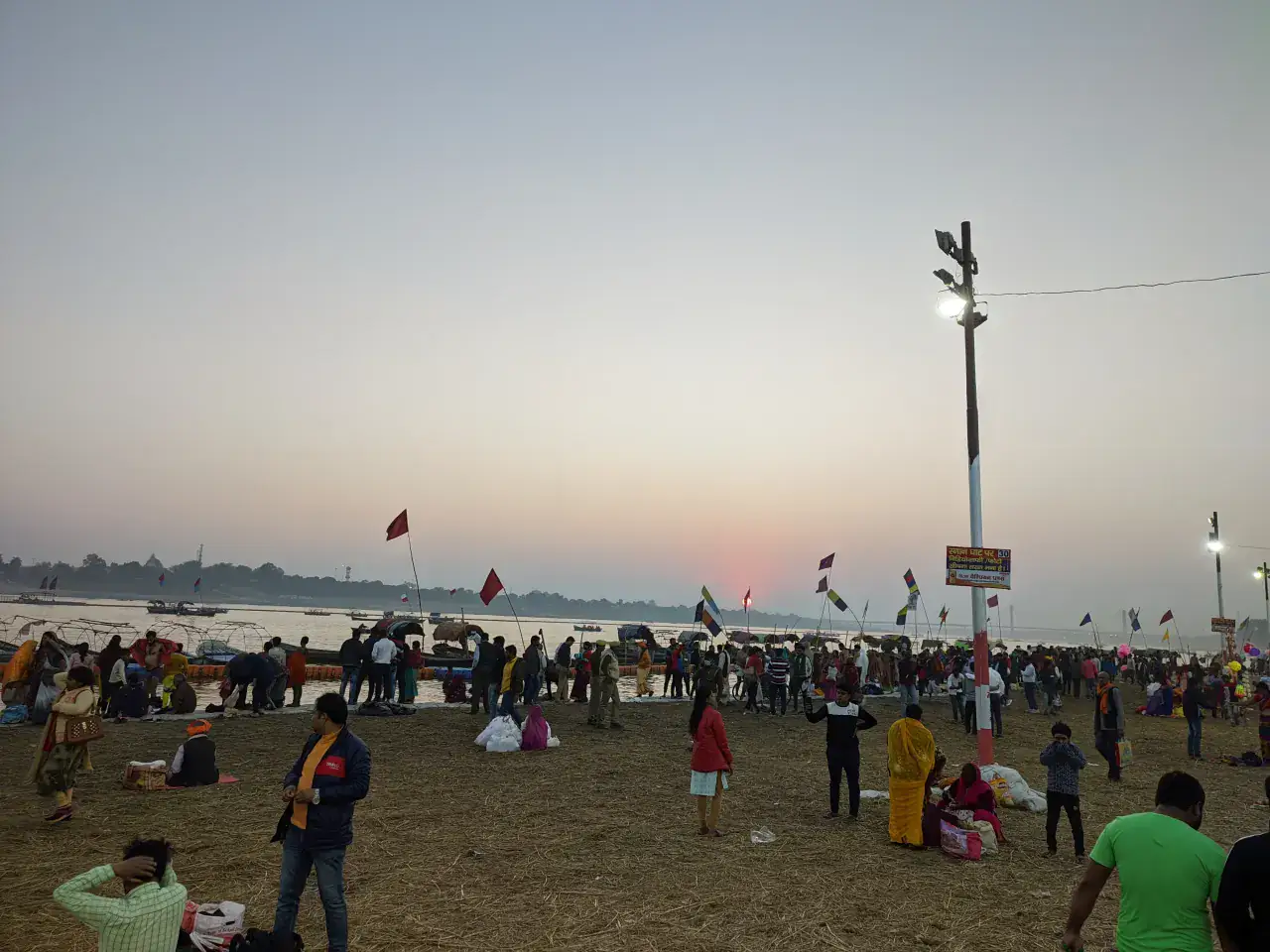
Pilgrims beside boats on the Triveni Sangam riverbank at dusk
The Sangam is a living river setting rather than a single enclosed attraction. Boats, bathing areas, walking routes and crowd arrangements can change with the season and the day.

Triveni Sangam at Prayagraj is the sacred confluence of Ganga, Yamuna and Saraswati. Ganga and Yamuna are the two rivers visible at the meeting. Saraswati is revered in the sacred tradition as the unseen third river; a visitor should not expect to see a separate third surface stream.

A family may come simply to behold the confluence and pray, or its visit may include a boat, snana, Tarpana, dana or another pandit-guided observance. None of these should be treated as compulsory for every traveller. The suitable form depends on the family's sankalpa, current river and access conditions, and the comfort of the people travelling.

Within the Setu–Ganga form of the Kashi–Rameshwaram Yatra, Prayagraj also becomes the meeting point between the outward and returning parts of the journey. Where the family's confirmed plan includes it, the designated Setu sand is offered at the Sangam and sacred Ganga water is received for the concluding worship at Rameshwaram.

Understand the Sangam visit in six simple stages

The exact route changes, but a thoughtfully prepared visit usually moves through these decisions. Seeing the whole sequence before travel helps the family arrive calmly instead of making every choice at the water's edge.

  1. Before the day

    Decide why your family is going

    Clarify whether the family hopes only to see the confluence and pray, or whether the visit may include a boat, sacred bath, ancestral observance, Veni Daan, Setu offering or collection of sacred water. The pandit should confirm the ritual purpose before materials are purchased or promises are made.

  2. Before departure

    Confirm the current meeting and access point

    Use the point agreed for the actual date rather than an old map pin or another traveller's boarding place. River levels, mela arrangements, traffic controls and temporary routes can change where a vehicle stops and where the final walk begins.

  3. At the river

    Look at the day's conditions before choosing the route

    Confirm whether the planned bank or boat approach is operating, how the boarding surface feels, what safety equipment is available and whether the water activity is appropriate for every traveller. A child, elder or non-swimmer should never be pressured to follow the same form as the strongest person in the group.

  4. With the pandit

    Begin with a clear sankalpa

    Tell the pandit who is undertaking the observance, what the family's purpose is, which rites have already been completed and whether any sacred material has been carried from Rameshwaram. This allows the prayer and sequence to be guided for the family rather than copied from a generic list.

  5. At the Sangam

    Undertake only the confirmed observance

    The visit may be a quiet darshan of the confluence, a respectful receiving of water, a permitted bath or a longer ritual. Follow the directions in force, remain steady around boats and wet surfaces, and allow another family the same privacy you would wish for your own.

  6. After the visit

    Return, change and protect what travels onward

    Plan where wet clothes will be changed, where the family can sit and how any sacred water or remaining ritual material will be carried. In the complete yatra, the Sangam morning should leave the family ready for the next sacred stage, not exhausted by avoidable rushing.
A riverbank visit and a midstream visit are not the same practical plan. Confirm the actual route for the date before deciding how much walking, boarding or changing support the family needs.

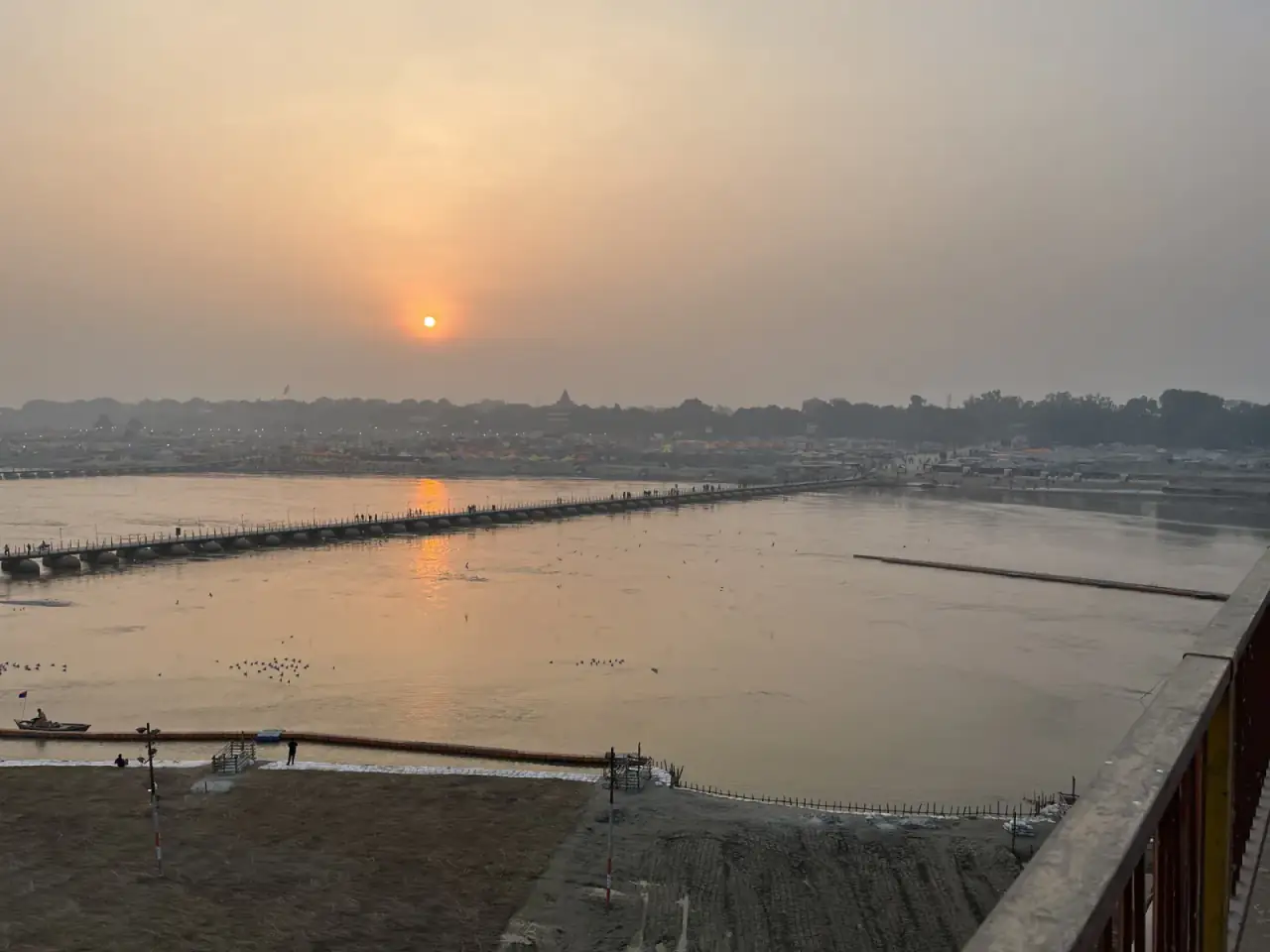
Wide morning view across the Triveni Sangam waters in Prayagraj
From a distance, the confluence is a wide meeting of water, sky and riverbank. Temporary bridges or river structures visible on one visit may not be present in the same form on another.

Which three rivers meet at Triveni Sangam?

DecisionWhat a visitor can understandHow to speak about it with care
GangaOne of the two rivers visibly meeting at Prayagraj.Its level, movement and apparent colour change with season and conditions, so one permanent visual description should not be promised.
YamunaThe other visible river at the confluence.A visitor may sometimes notice a difference between the waters, but a sharp, photograph-ready dividing line is not guaranteed.
SaraswatiThe sacred third river in the Triveni tradition, revered as joining the confluence unseen.Honour the traditional understanding without claiming that a third surface channel is visibly present or must be proved in a photograph.

Why Prayaga is honoured as Tirtharaja

Prayaga is the ancient sacred name associated with this confluence, and Tirtharaja means the foremost among tirthas. The title helps a pilgrim understand why generations have come here for purification, prayer, giving and remembrance; it does not ask the family to diminish the greatness of Kashi, Gaya, Rameshwaram or another sacred place.

The Mahabharata's Vana Parva, in its Tirtha Yatra section, and the Matsya Purana's Prayaga Mahatmya preserve the praise of Prayaga and the confluence. Prayaga traditions are also preserved in the Kurma Purana and Padma Purana. Our companion article on why Prayaga is revered as Tirtharaja explores this sacred understanding more fully. For the visit itself, the important beginning is simple: approach the Sangam with shraddha, a clear purpose and respect for the living river.

What a first-time visitor may see at the Sangam

The Sangam is a broad river landscape rather than one small marked spot. Depending on the season and local arrangement, a visitor may see boats gathered near the bank, temporary or fixed platforms used for river access, open sandy stretches, bathing areas, flags used as meeting markers and the fort area within the wider setting.

The exact meeting of the waters may feel visually subtle. Do not measure the importance of the visit by whether the camera captures two colours or a distinct seam. The sacred identity of Triveni rests in the confluence and its tradition, while the appearance of the surface changes with light, sediment, river level and weather.

The Sangam area, the boarding point, the permitted bathing area and the place where a family undertakes a rite may not all be the same point. This is why a clear meeting arrangement and local guidance matter more than trying to reach a location saved from an old video.

Practical details checked for your visit

Last checked 2 September 2026
  • The Prayagraj District Administration identifies the Sangam near the fort and describes it as approximately 7 km from Civil Lines.
  • The district visitor page says boats can be rented from the ghat near the fort and describes platforms in the mid-river area where pilgrims may undertake observances.
  • The Ministry of Tourism's Incredible India guide identifies Triveni Sangam as the confluence of Ganga, Yamuna and the Saraswati of sacred tradition, and describes its importance in Prayagraj's pilgrimage life.
  • Boat fares, the exact boarding point, bathing and boating conditions, available safety equipment, wheelchair access and event traffic plans can change and are not fixed by these general visitor guides.
  • We therefore check the practical arrangement again for the family's date—especially during river changes, Magh Mela, Kumbh or another large gathering.

Choose a Sangam visit that fits the family

DecisionWhat this form of visit may includeWhat should be confirmed before setting out
Riverbank darshan and prayerA respectful view of the confluence area, prayer near an authorised bank and participation without assuming a boat or deep water entry.The current vehicle approach, walking surface, permitted riverbank area, shade or seating needs and whether the family's intended prayer can be guided there.
Boat approach to the confluenceTravel from the current boarding point towards the Sangam area, with the possibility of prayer or a permitted water observance in the arranged place.The operator and boarding point, total charge and inclusions, boat capacity, seating, available safety equipment, weather, river conditions and comfort of every traveller.
Pandit-guided ritual visitThe sankalpa and family-selected observance, which may include snana, Tarpana, dana, Veni Daan or the Setu–Ganga stage when applicable.Who performs the rite, which materials are needed, where it will be undertaken, how long the family should allow and which customs belong specifically to its tradition.

A boat and a sacred bath are choices to prepare—not tests of devotion

Many visitors associate the Sangam with a boat journey, but a boat is not automatically the right plan for every person or every day. Before boarding, understand the full amount being agreed, the route, who will accompany the family, the seating and capacity, and the safety equipment available. Follow the current local directions and remain seated while the boat is moving; photographs can wait until everyone is steady.

Bathing should take place only where and in the manner permitted for the day. River depth, current, temperature and footing are not fixed. Children, non-swimmers, elders and anyone uneasy around open water need a responsible companion and should never be urged into a deeper or longer immersion to imitate another pilgrim.

If entering the water is unsuitable or not desired, the family can explain that clearly to the pandit and ask how to participate respectfully within its sankalpa. The religious form belongs with the pandit; personal medical suitability belongs with the traveller and their doctor.
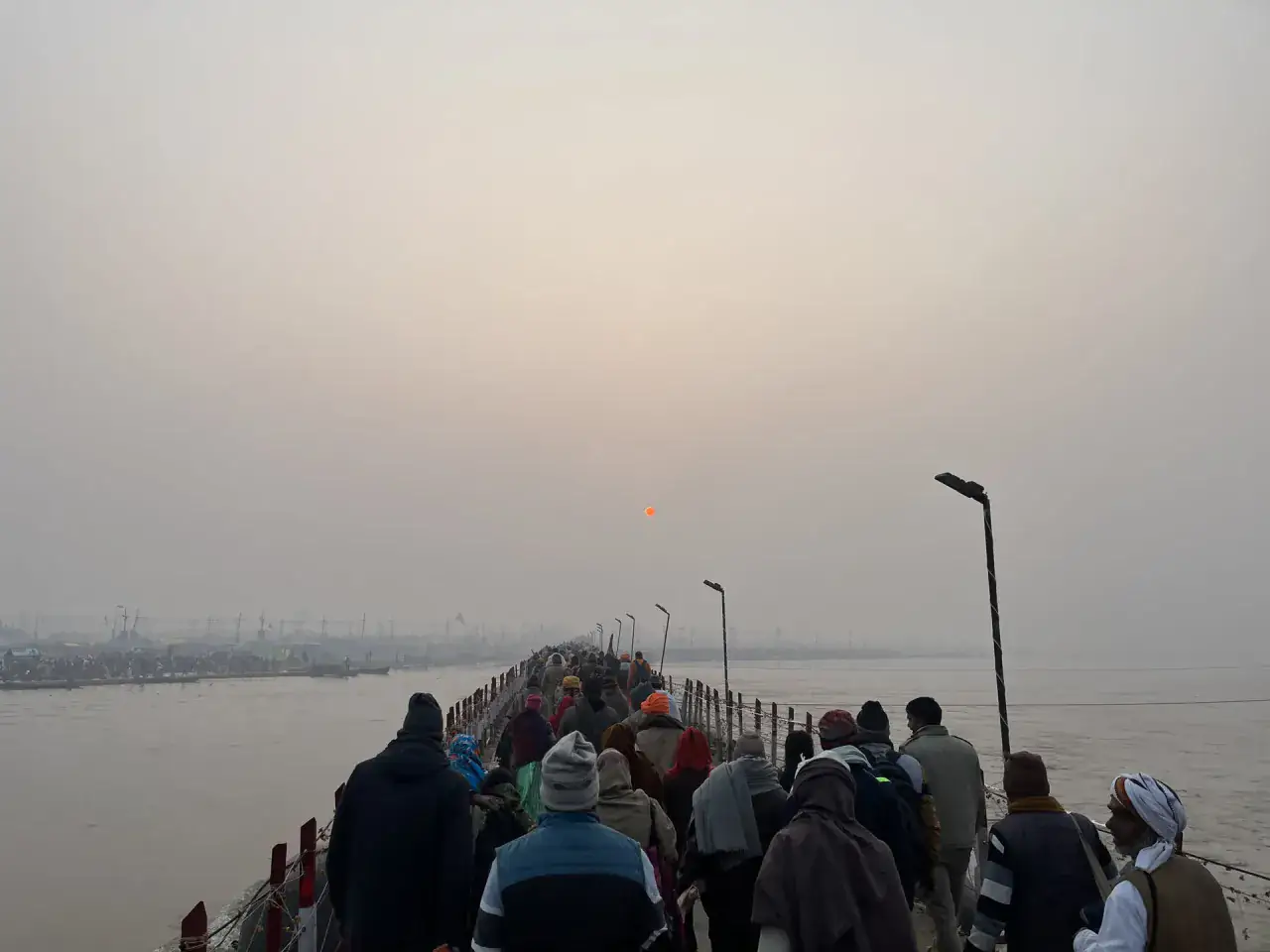
Pilgrims walking on a temporary pontoon approach at the Sangam in morning mist
Temporary pontoon approaches may form part of a seasonal or event arrangement. Their location, walking distance and surface should never be assumed from an earlier visit.

Plan the full approach for elders, children and limited mobility

Ask about the final vehicle stop, walking distance, sand, steps or pontoon surface, hand support, boarding height, boat seating, shade, toilet access and the return path. These details can change with the river and event layout, and a completely step-free bank-to-boat route should not be assumed in advance.

For a traveller who cannot manage a moving boat, uneven approach or water entry comfortably, plan a riverbank or darshan-focused alternative instead of treating the person as excluded. One familiar companion should remain responsible for the traveller throughout the visit, including the return and changing break.

Only the traveller and their doctor can decide whether open-water bathing, cold conditions, heat, fasting, prolonged standing or boat movement is medically suitable. Share the real plan—not only the words 'Sangam visit'—when seeking medical guidance.

Access details last checked 2 September 2026

The same Sangam can feel very different across the year

During Magh Mela, Kumbh and other large gatherings, the riverbank may become part of a much larger temporary city. Roads, parking, walking distances, pontoon routes, security boundaries, accommodation and the time needed to reach the water can all differ from an ordinary date. The scale is meaningful for families who wish to experience the pilgrimage season, but it should be chosen knowingly.

Winter mornings may bring cold and mist; hotter periods require a plan for sun and hydration; changing river levels can alter access and bathing arrangements. These are reasons to confirm the day's conditions, not reasons to fear the visit. A family with elders or a longer rite may prefer an overnight in Prayagraj, while a comfortable group may use the same-day form included in the shorter itinerary.

There is no single best month or hour for every family. The right window brings together the sacred date, the expected crowd, the traveller's strength, the rite's duration and the actual road and river arrangement.
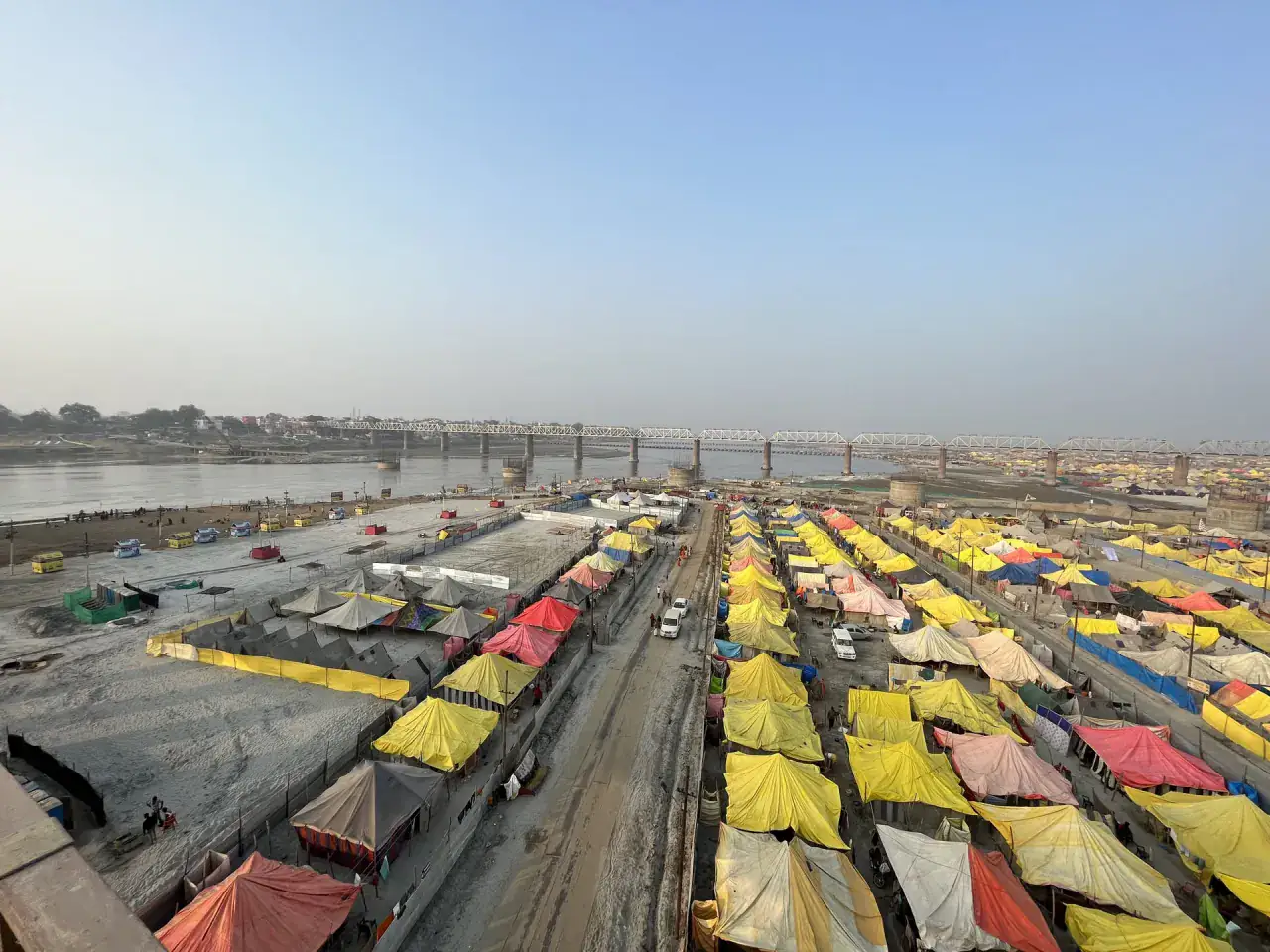
Rows of temporary pilgrimage tents beside the river at Prayagraj
Large pilgrimage periods can transform the Sangam approaches into a temporary city. The event-day route should be planned as its own journey, not compared with an ordinary morning.

Let the family's purpose decide the ritual plan

The Prayaga tradition is associated with snana, Tarpana, dana, prayer and ancestral remembrance. A first darshan of the Sangam, a specific ancestral observance, Veni Daan and the Setu–Ganga stage of a complete yatra are not interchangeable names for one standard ceremony.

Veni Daan and hair-related customs especially vary by region, family tradition, marital context and officiating lineage. Wait for the appropriate pandit's guidance before arranging hair cutting, buying a ritual bundle or deciding who will undertake the observance, and explain what the family follows and what has already been completed.

When the visit includes ancestral ashes, an earlier Shraddha, a tithi requirement or sacred material carried from another tirtha, share that before the day. The guidance can then protect both the meaning of the observance and the family's time at the river.

Where the Sangam belongs in the Kashi–Rameshwaram Yatra

01

The opening

When the family follows the Setu–Ganga form described on this website, the sacred opening at Rameshwaram has already taken place before the Sangam stage. In the current itineraries, Prayagraj is approached within the northern part of the journey, commonly from the Kashi base.

02

The northern portion

At Prayagraj, the family undertakes the Sangam observance confirmed for its sankalpa. Where applicable, the designated Setu sand is offered here and sacred Ganga water is received and protected for the journey south.

03

The return

The northern journey may continue through Kashi, Gaya or the next stop in the family's confirmed order before the return south. The sacred water is carried onward for the concluding worship at Ramanathaswamy.

The detailed meaning of the Setu offering and returning Ganga water is explained in the dedicated article. The route and stays can be customised, while the sacred sequence is confirmed with the family's pandit.

Carry less, but prepare the important things well

DecisionA useful way to prepareWhy it matters at the river
Clothing and changingWear modest clothing suitable for the family's intended observance and keep a dry change where it can remain protected.Wet clothing, breeze, changing privacy and the walk back can affect comfort long after the brief moment in the water.
Medicine and essentialsKeep essential medicine in its labelled packing inside a water-resistant pouch with one responsible companion.A mixed bag of wet clothes is not a dependable place for medicine, identity documents, money or a phone.
Ritual materialsCarry only the materials confirmed for the family's actual sankalpa and the person performing it.This avoids waste and prevents a generic vendor bundle from deciding the rite before the pandit understands the family.
Sacred water containerIf water is to travel onward, confirm the suitable clean container, quantity and sealing method before the Sangam morning.A protected container matters through hotels, road journeys and flights until the concluding worship in Rameshwaram.
Valuables and wasteLeave unnecessary valuables behind and keep a small bag for anything that must return from the riverbank.The family can move more safely while also leaving flowers, packaging and personal waste only where current arrangements permit.

Keep the sacred purpose steady and the practical plan flexible

What stays the same

  • Approach Triveni Sangam with a clear family purpose, respect for the rivers and consideration for other pilgrims.
  • Protect children, elders, medicines, valuables and any sacred material throughout the complete visit.
  • Follow the current directions for river access, boats, bathing, photography and waste.

What your family can customise

  • Whether the family remains near the bank, uses a boat, bathes or undertakes a longer ritual.
  • The date, time, Prayagraj stay, transport, meeting point, changing break and amount of rest.
  • The exact snana, Tarpana, dana, Veni Daan, ancestral or Setu–Ganga observance included for the family.

What we will help you decide

  • The sankalpa, performer, ritual sequence and required materials with the appropriate pandit.
  • The current road and river access, boarding point, boat arrangement, full charge and available safety equipment.
  • The walking, seating, changing and companion plan for children, elders and limited mobility.
  • Personal medical suitability with the traveller's doctor whenever water, weather, fasting or exertion creates concern.

Common questions about Triveni Sangam Prayagraj

These answers explain the stable meaning of the place and the decisions a family should prepare. Boat, bathing, access and event arrangements still need to be checked for the actual date.

What is Triveni Sangam Prayagraj?

Triveni Sangam is the sacred confluence at Prayagraj where Ganga and Yamuna visibly meet and Saraswati is revered in tradition as joining them unseen. It is approached for darshan of the confluence, prayer, sacred bathing and family-specific observances.

Which three rivers meet at Triveni Sangam?

The three rivers are Ganga, Yamuna and Saraswati. Ganga and Yamuna are visible. Saraswati is the unseen sacred third river in the traditional understanding of Triveni.

Can Saraswati be seen at Triveni Sangam?

A visitor should not expect a separate third surface stream. Saraswati is revered as joining the confluence unseen. The tradition can be honoured clearly without presenting an invisible channel as a photographed or observed fact.

Where is Triveni Sangam in Prayagraj?

The Prayagraj District Administration places the Sangam near the fort and approximately 7 km from Civil Lines. The final vehicle stop, ghat, boarding point and walking route can change, so use the meeting point confirmed for the day rather than only a general map pin.

Is a boat necessary to visit Triveni Sangam?

No single answer applies to every visitor. A boat is commonly used to approach the confluence area, but a bank-based or darshan-focused visit may be more suitable for some families or conditions. Confirm both the practical route and the ritual purpose before deciding.

Can visitors take a holy dip at Triveni Sangam?

Sacred bathing is associated with Prayaga, but it should take place only in the area and manner permitted for the day. River conditions and personal ability matter. A person who should not enter the water can ask the family pandit about a respectful form of participation.

What are the timings for Triveni Sangam?

The Sangam is an open river setting rather than one temple gate with a single dependable schedule. Road access, boats, bathing zones, ritual arrangements and event controls can each follow current conditions. Confirm the intended visit window and services for the actual date.

How much does a boat ride at Triveni Sangam cost?

There is no dependable permanent rate for every future date. The amount can depend on the current arrangement, route, duration, boat and crowd period. Understand the complete charge, inclusions and capacity before boarding, or ask for the boat to be included clearly in the written yatra proposal.

What rituals are performed at Triveni Sangam?

Families may undertake snana, Tarpana, dana, prayer, ancestral observances, Veni Daan or the Sangam stage of the Setu–Ganga yatra. These are not one standard ritual package. The family's sankalpa, tradition and earlier rites should guide what is appropriate.

What is the role of Triveni Sangam in the Kashi–Rameshwaram Yatra?

In the Setu–Ganga form described on this website, Prayagraj is the northern confluence where the designated Setu sand may be offered and sacred Ganga water received for the return to Rameshwaram. The exact observance is confirmed for the family rather than assumed from the itinerary name alone.

Is Triveni Sangam suitable for senior citizens and children?

A suitable visit can often be shaped, but do not assume that every boat, pontoon, sandy approach or bathing route is step-free or comfortable. Confirm the actual surfaces, walking, boarding, seating and companion plan, and choose a bank-based alternative when that better protects the traveller.

How much time should a family keep for the Sangam visit?

There is no honest single duration for every visit. A simple darshan, a boat journey and a longer pandit-guided observance require different time, while traffic, walking, crowds and changing add to the morning. Ask for the complete door-to-door plan instead of counting only the time spent at the water.

Prepare the Sangam visit around your family

Share the likely date, where the family will stay, the travellers' ages and mobility, and whether the visit may include a boat, bathing, ancestral observance, Veni Daan, Setu sand or sacred water for Rameshwaram. Tell us which rites have already been completed and which family custom you follow. We can shape the transport, Prayagraj stay, current access checks and written inclusions around that purpose while the appropriate pandit confirms the sacred particulars.

Begin your enquiry