
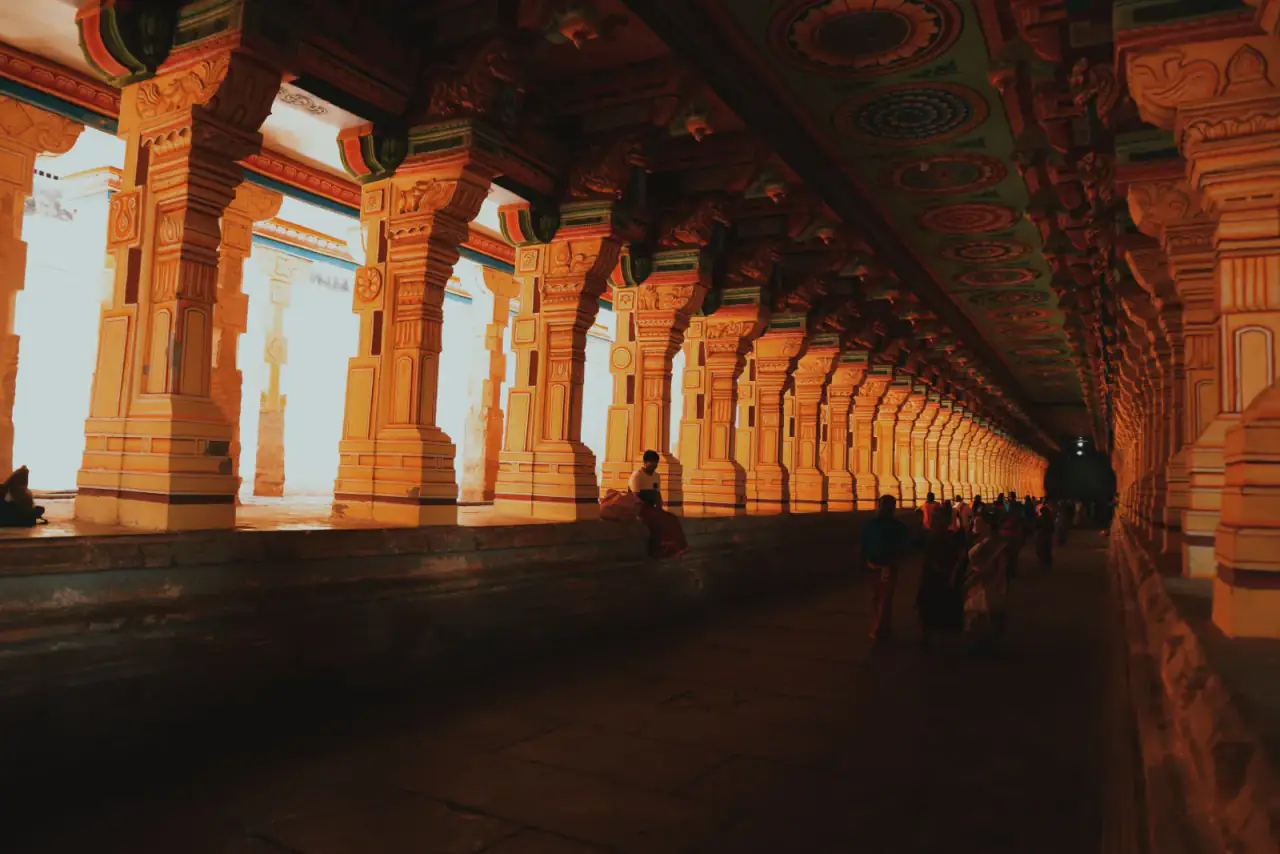
Inside Sri Ramanathaswamy Temple are twenty-two sacred water sources commonly called the twenty-two theerthams or wells. For many first-time pilgrims, this bathing observance is one of the most unfamiliar parts of Rameshwaram: it takes place inside an active temple, clothing becomes fully wet, the floor can be slippery and the route moves with other pilgrims.
The experience becomes much easier when the family knows what is sacred, what is practical and what must be checked locally. The sea bath, wells and darshan are often understood as one flow, but the exact sankalpa, access, route and participation should be confirmed for the family's chosen observance.
What the twenty-two theerthams are
The water sources lie within the Ramanathaswamy Temple complex and are associated with distinct names and traditions. Temple attendants draw water and pour it for pilgrims as they move through the authorised route. This is a living bathing observance, not a self-guided tour of twenty-two separate structures.
Local tradition connects the number twenty-two with Rama's arrows and understands the waters as carrying the sanctity of many tirthas. The Skanda Purana's Setu Mahatmya provides the wider sacred setting of Setu and Rameshwaram. A family need not master every story before arriving; it should understand that the water is received as tirtha and approached with respect.
The usual flow from shore to temple
Many pilgrims today approach Agni Theertham on the East Gate side before entering the temple. The normal bathing flow enters through the East Gate, reaches the twenty-two wells on the North Gate side and leaves through the South Gate. There is no dependable private changing room at the shore or after the wells, so the most comfortable next step is to return briefly to a nearby hotel, change into dry clothing and come back for darshan. Shared makeshift spaces and natural drying remain secondary options; the separate guide to where to change clothes after the twenty-two wells explains each choice in detail.
- 01
Confirm the morning plan
Check the current access window, entry point, ticket or token arrangement, clothing, restricted items, changing facilities and the meeting place for the family.
- 02
Agni Theertham, if included
The pandit explains the sankalpa and whether, where and how the family should enter the sea. Water depth and immersion should never be copied from a general instruction; sea conditions and personal safety come first.
- 03
East Gate and temple entry
Use the official locker and footwear facility in front of the East Gate. Temple tickets may be booked through the temple's official government website; physical tickets can also be purchased in the East Gate area. Follow current phone, bag and security instructions, keep the family together and know who is carrying essential medication.
- 04
The twenty-two wells on the North Gate side
Temple attendants guide the authorised route and pour water. The current order, crowd flow and whether every well is accessible can be controlled by the temple.
- 05
Leave through the South Gate and choose the wet-to-dry plan
After the well circuit, the normal route leaves through the South Gate. Return around to the East Gate facility if belongings or footwear must be collected, then use the nearby hotel when privacy or assistance is needed. If that is not practical, use a suitable shared makeshift space if available or allow modest bathing clothes to dry naturally.
- 06
Return for darshan and worship
The East Gate is the main darshan entry. Proceed according to the current darshan plan and the family's ritual guidance. Bathing is preparation for worship, not a race to complete twenty-two checkpoints.
What the experience may feel like
Expect an active, echoing and wet temple environment. The water temperature, number of pilgrims and pace can vary. Carved-pillared corridors form the architectural setting, while attendants and other families are moving through the same route.
Allow flexible time for the complete movement. Its duration depends on the access window, crowd, temple flow, the family's pace and any assistance required. A quieter period may feel more spacious; a sacred festival period may feel far busier. Both require patient attention to the local instructions.
The observance can be deeply memorable without dramatic language. Receiving water at each theertham, walking together and then approaching Ramanathaswamy in dry clothes gives many families a clear sense of having prepared body and mind for darshan.
Clothing and what to carry
Wet clothing
Wear modest garments suitable for the temple and for becoming fully wet. Confirm any current dress requirement rather than relying on an old online list.
Dry change and towel
Carry a complete dry set for each participant, a towel and a waterproof bag for wet garments. Ask where these may be kept and used.
Valuables and restricted items
Check current phone, camera, bag, leather-item and locker rules. Carry as little as possible and decide who safeguards essential documents or medicines.
Footwear
Temple areas are entered barefoot where required. Choose easy footwear for the approach and do not rely on ordinary shoes as protection once inside.
Warmth and hydration
A dry shawl or light layer may help someone who becomes cold. Drink and eat according to medical needs and the fasting guidance confirmed for the family.
Meeting plan
Agree on a clear point outside the bathing flow in case family members become separated, especially during crowded periods.
Children, elders and health concerns
Wet stone, changes of clothing, moving crowds and repeated water pouring can be difficult for a child, elder or anyone with poor balance, limited mobility, a respiratory condition or sensitivity to cold. Share these needs before the morning and seek personal medical advice from a qualified clinician where appropriate.
Wheelchair use is not currently confirmed for the twenty-two-well circuit because parts of the wet path are not suitable for wheelchair travel. A wheelchair arranged for the dry darshan route does not include a dedicated helper, so a family companion must provide hands-on assistance. Ask the local team where a pause is possible and whether participation can be adapted before the family's plan is finalised.
Neither deep sea immersion nor completion of every well should be treated as a test of devotion. The appropriate pandit can guide a safe and respectful alternative when the full bathing route is unsuitable.
If the family cannot undertake all twenty-two wells
Tell the pandit and coordinator before entering the temple. Explain whether the concern is balance, fatigue, a medical condition, distress around water, clothing or the pace of the crowd. The answer may involve modified participation, symbolic receipt of water, another family member leading or proceeding directly towards suitable worship, subject to current temple permission.
Settle the approach in advance so the family is not asked to make a difficult decision in the middle of a wet corridor. Any ritual alternative should be confirmed with the pandit before the temple morning.
The place of the wells in the complete yatra
The theerthams are commonly understood as a purificatory observance associated with the opening Rameshwaram days. For families undertaking the complete Setu–Ganga circuit, the broader plan may also include a sand-related observance, northern tirthas and returning Ganga water. The exact relationship between these parts belongs to the family's sankalpa.
The wells do not make a person “fit” through physical endurance. Their meaning lies in sacred preparation, received with humility and followed by worship. When the practical care is arranged well, children, elders and first-time pilgrims can approach that meaning without unnecessary fear.